 English
 中文简体
中文简体 русский
Product Consultation
Your email address will not be published. Required fields are marked *

Content
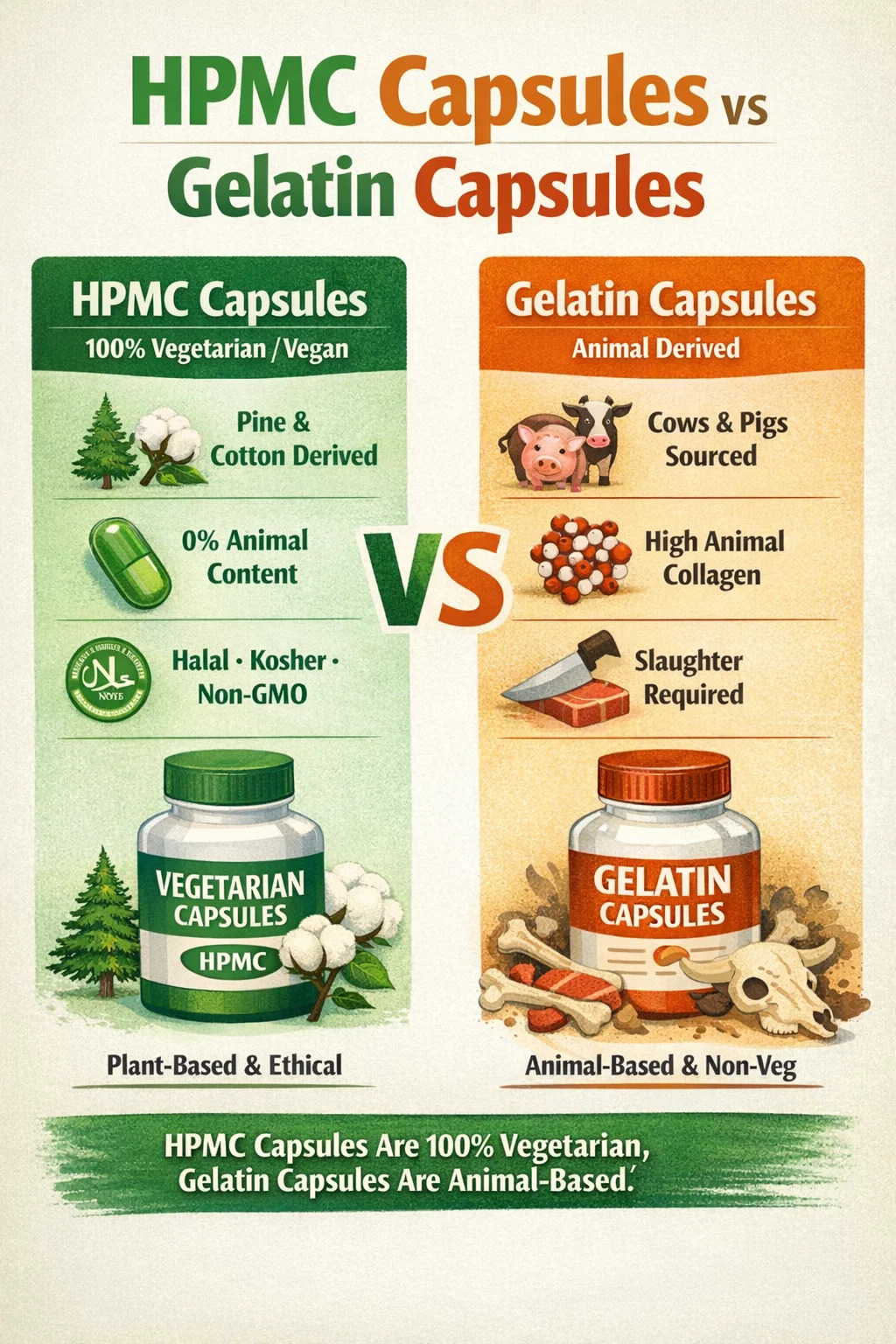
To answer the question directly: HPMC capsules are strictly vegetarian and entirely vegan-friendly. They contain zero animal derivatives, zero animal by-products, and involve no animal testing. HPMC stands for Hydroxypropyl Methylcellulose, which is a complex carbohydrate polymer extracted directly from plant sources. For anyone adhering to a vegetarian, vegan, or plant-based diet, supplements and medications encased in HPMC shells are completely safe to consume and align fully with these dietary principles.
The alternative to HPMC is the traditional gelatin capsule. Gelatin is decidedly non-veg, as it is manufactured by boiling the skin, tendons, ligaments, and bones of animals, most commonly cows (bovine) and pigs (porcine). The development and widespread adoption of HPMC capsules were specifically driven by the need to provide a high-quality, non-animal alternative to these traditional gelatin shells.
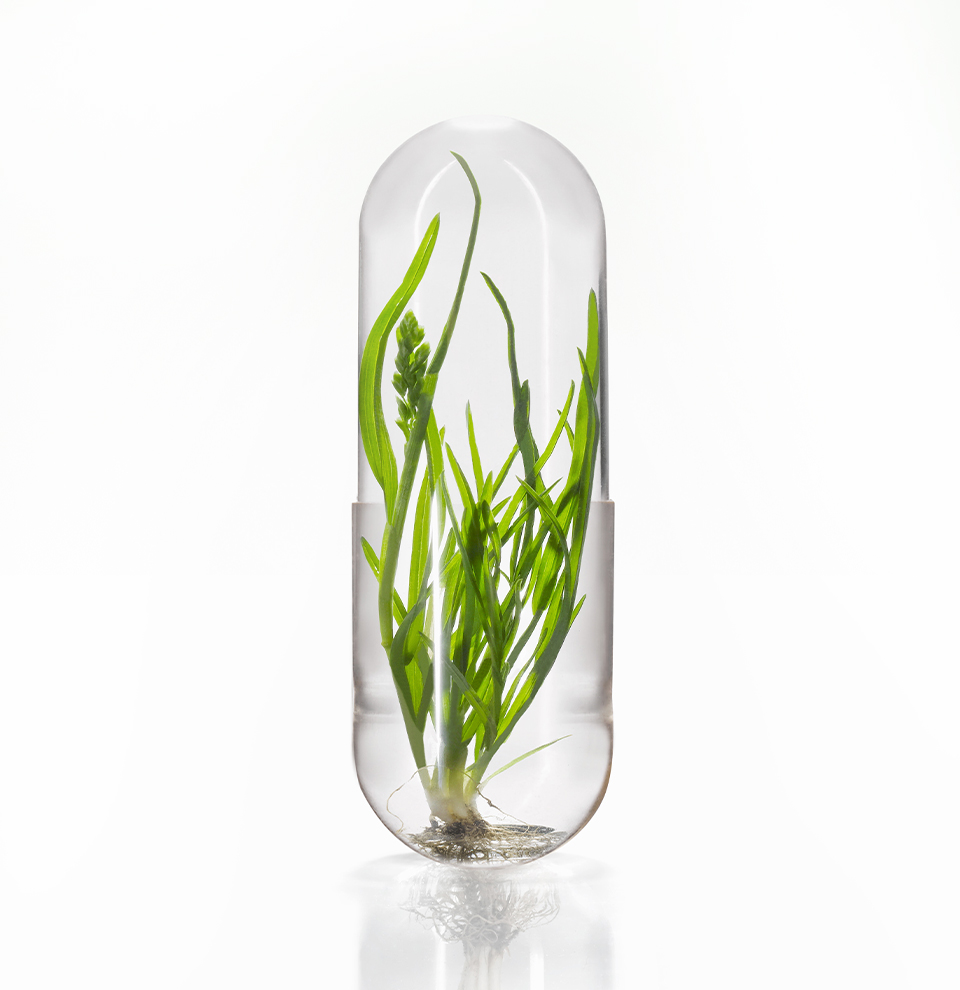
Understanding exactly where HPMC comes from helps clarify why it qualifies as a vegetarian product. The core ingredient is cellulose, the most abundant natural polymer on Earth, which forms the structural walls of all plant cells.
Commercial HPMC is primarily synthesized from two main botanical sources. The first is softwood pulp, harvested from coniferous trees such as pine and spruce. The second is cotton linters, which are the fine, silky fibers left on the cotton seeds after the longer fibers have been removed by the cotton gin. Both sources yield high-purity alpha-cellulose.
Raw plant cellulose is tough and insoluble in water, making it unsuitable for a capsule that needs to dissolve in the human stomach. To fix this, the raw cellulose undergoes an alkalization and etherification process. It is treated with specific chemical reagents (like methyl chloride and propylene oxide) in a controlled environment to transform the rigid plant fibers into Hydroxypropyl Methylcellulose. This modified plant fiber can be dissolved in water to form a gel, which is then molded onto stainless steel pins, dried, and cut to form the two halves of the vegetarian capsule shell.
Because the ingredients and the manufacturing process of HPMC are completely isolated from animal agriculture, these capsules easily meet the requirements for various global dietary certifications.
The shift toward HPMC capsules is not solely driven by dietary ethics; there are massive technical benefits to using this plant-based material for pharmaceutical and nutraceutical products.
Moisture Content and Stability: Animal-based gelatin relies heavily on water to maintain its structural integrity, possessing a moisture content of 13% to 16%. If filled with moisture-sensitive powders like probiotics or dried herbal extracts, the gelatin shell will donate its water to the powder, causing the shell to become brittle and shatter. HPMC capsules contain only 3% to 8% moisture. They do not react to low humidity environments and offer superior protection for hygroscopic (water-absorbing) ingredients.
No Cross-Linking Reactions: Gelatin is an animal protein. Proteins contain amino acids that can react with certain fill materials, particularly aldehydes or Vitamin C. This reaction, known as cross-linking, causes the gelatin shell to become tough and insoluble, severely delaying the release of the medication in the stomach. Because HPMC is derived from plant carbohydrates rather than proteins, it is chemically inert and immune to cross-linking, ensuring a consistent dissolution rate over the product's entire shelf life.
To provide absolute clarity on the differences, refer to the data regarding material sourcing and suitability.
| Characteristic | HPMC Capsules | Gelatin Capsules |
|---|---|---|
| Dietary Classification | 100% Vegetarian / Vegan | Non-Veg (Animal Derived) |
| Raw Material Source | Pine Wood Pulp, Cotton Linters | Bovine (Cow) or Porcine (Pig) Skin/Bones |
| Protein Content | 0% (Carbohydrate Polymer) | High (Animal Collagen) |
| Religious Compliance | Universally Halal & Kosher | Requires Strict Slaughter Verification |
Manufacturers legally must disclose the ingredients used in their capsule shells. If you are specifically looking for vegetarian options, you must read the "Other Ingredients" or "Inactive Ingredients" section located beneath the primary supplement facts panel.
Look for the exact phrase "Hydroxypropyl Methylcellulose" or the pharmaceutical term "Hypromellose." Many consumer-facing brands will simplify this and write "Vegetarian Capsule," "Cellulose Capsule," or "Plant-Derived Shell." If the label states only "Capsule," "Gelatin," or "Bovine Gelatin," you are dealing with a non-veg product. Due to the higher manufacturing cost of HPMC, brands that use plant-based capsules almost always advertise it prominently on the front of the bottle to attract the vegetarian and vegan market demographics.
Your email address will not be published. Required fields are marked *
If you would like to learn more about our products, please feel free to contact us and we will do our to assist you.
Copyright © Shaoxing Zhongya Capsule Co., Ltd. High Quality Empty Capsule Manufacturers Wholesale Transparent Empty Capsule Factory
All Rights Reserved.

