 English
 中文简体
中文简体 русский
Product Consultation
Your email address will not be published. Required fields are marked *

Content
Ask five suppliers what “pharmaceutical grade” means and you may receive five different answers. For a capsule manufacturer, however, the definition is not vague. Pharmaceutical grade is not a single stamp, logo, or certificate on a box. It is a set of manufacturing, purity, consistency, and documentation requirements that a material must meet before it can be used in or with a medicine. The term matters especially when you are buying empty hard capsules because the shell is not a neutral wrapper—it is part of the dosage form itself.
A practical way to define pharmaceutical grade is to look at how the material is produced, tested, and documented. The University of California, Merced, for example, describes a pharmaceutical-grade substance as “any active or inactive drug, biologic, reagent, etc., manufactured under Good Manufacturing Practices.” That definition is useful because it points to three separate pillars:
A pharmaceutical-grade raw material is tested against purity, potency, and impurity limits published in recognized pharmacopoeias, such as the United States Pharmacopeia (USP), European Pharmacopoeia (EP), or Japanese Pharmacopoeia (JP). These monographs define acceptable assay ranges, elemental impurity limits, residual solvent levels, and microorganism limits. If a material does not meet the relevant monograph, it cannot honestly be called pharmaceutical grade.
Pharmaceutical grade also means the material is made under current Good Manufacturing Practices. In practice, this involves controlled environments, validated processes, clean equipment, trained personnel, and a quality system that can trace every batch back to its raw materials. GMP is what separates pharmaceutical-grade production from food-processing production, even when both use similar starting ingredients.
A single clean batch is not enough. Pharmaceutical grade requires reproducible quality across every batch. That reproducibility is confirmed through batch records, in-process checks, and a certificate of analysis issued for each delivery. When a buyer cannot see the production line, these documents become the core evidence that a supplier is actually delivering pharmaceutical-grade material.
There is not one universal limit that applies to every material. The specification matrix below shows the type of criteria that a pharmaceutical-grade excipient or capsule shell is normally expected to meet.
| Parameter | Typical Requirement | Why It Matters |
|---|---|---|
| Purity (assay) | Usually 98.0%–101.0% of label claim | Prevents under-dosing or over-dosing of active ingredients |
| Elemental impurities | ICH Q3D control limits | Avoids cumulative exposure to heavy metals |
| Microbial limits | TAMC ≤ 10³ CFU/g for solid oral dosage forms | Protects patients, especially those with weaker immunity |
| Residual solvents | ICH Q3C classification-based limits | Prevents toxic solvent carryover from manufacturing |
| Disintegration time | Usually ≤ 30 minutes in water at 37°C | Predicts whether the capsule will open and release contents |
| Moisture (gelatin shell) | Approximately 12.5%–17.5% | High moisture causes soft shells; low moisture causes brittleness |
| Moisture (HPMC shell) | Approximately 5%–8% | Different water behavior changes filling and storage requirements |
Buyers often compare “food grade” and “pharmaceutical grade,” and the difference is much larger than one purity percentage. The table below summarizes how the three common labels behave in real purchasing situations.
| Dimension | Food Grade | Supplement Grade | Pharmaceutical Grade |
|---|---|---|---|
| Purity | Safe to eat, but no medicinal assay | Variable; many products have no official monograph | Defined compendial limits with active ingredient assay |
| Manufacturing environment | General food hygiene standards | Dietary supplement GMP, varies widely | Pharmaceutical GMP with cleanroom and traceability |
| Testing | Basic food safety checks | Identity and contamination testing, but inconsistent | Full batch release testing plus stability data |
| Documentation | Minimal paperwork | CoA sometimes available, not always detailed | Batch CoA, stability reports, deviation investigations |
| Relative cost | Lowest | Medium, highly variable | Highest, because testing and controls are stricter |
A commonly discussed industry benchmark is that pharmaceutical-grade materials are typically delivered at 98%–99% purity, while food-grade versions may be released at lower minimum specifications such as 96%. Those numbers are minimums, not typical values. More important than the exact percentage is whether the material follows a pharmacopoeial monograph and a pharmaceutical quality system. In a discussion thread on chemistry forums, users made exactly that point: the limit values matter less than the specification and testing framework behind them.
An empty capsule shell can look identical from the outside, but the difference between a food-grade shell and a pharmaceutical-grade shell becomes visible on the production line and in the patient’s body. Capsules sit in direct contact with the drug, so the shell has to meet the same quality logic as the active ingredient.
Gelatin capsules contain a specific amount of bound water. If moisture is too high, shells soften, deform, and release the fill too early. If moisture is too low, shells become brittle and crack during filling or shipping. A pharmaceutical-grade gelatin capsule is manufactured and stored to keep moisture inside the stated specification, so the filling machine runs smoothly and the final product survives transport. For HPMC capsules, moisture behavior is different, but the principle remains the same: a controlled range, verified for each batch.
 Pharmaceutical Empty Hard Gelatin Capsule Manufacturers, SuppliersZhongya Capsule Co., Ltd is China pharmaceutical hard gelatin empty capsule manufacturers, empty gelatin capsule shell suppliers, Our fac...View Product →
A capsule becomes a medicine only when it opens at the right time and in the right environment. Pharmaceutical-grade shells are checked for disintegration behavior in purified water at 37°C. If the shell is made from lower-grade gelatin or stored in poor conditions, disintegration time can drift outside accepted limits, which changes how quickly the body absorbs the drug. This is why buyers should ask for disintegration data, not just a general statement about purity.
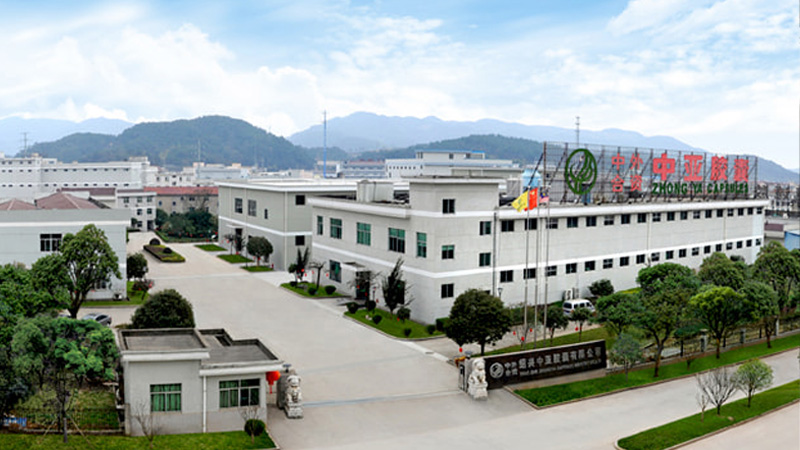
Pharmaceutical-grade capsule production has to control dust, microbial load, lubricants, and cross-contamination between products. Our production base in Shaoxing operates on a 20,000-square-meter plant with an automated production process and an in-house capsule chemistry laboratory. These facilities are not just about speed; they are what allow batch-to-batch consistency at an annual output of 80 billion capsules. Buyers who visit or audit a supplier can see whether the environment matches the grade they are paying for. More detail on those capabilities is available in our description of the automated production line and the advanced capsule chemistry laboratory.
You do not need to be a quality chemist to filter out unreliable capsule suppliers. You only need to ask the right questions and demand evidence. Here is a practical verification sequence used by experienced procurement teams.
 Wholesale HPMC Vegetable Empty Capsules Manufacturers, SuppliersZhongya Capsule Co., Ltd is China HPMC empty capsule manufacturers and vegetable empty capsule suppliers, Our factory specializes in whol...View Product → and their moisture specification, which usually sits in the 5%–8% range.
If a supplier cannot answer these five points clearly, treat that as a warning sign. For a more detailed supplier evaluation checklist, see our guide on the ten things to pay attention to when buying hollow capsules.
Pharmaceutical grade is not a single product type. It applies differently depending on the target market and the formulation.
 Halal Certificated Empty Gelatin Capsule Shell Manufacturers, SuppliersZhongya Capsule Co., Ltd is China halal certificated empty gelatin capsule shell manufacturers and empty halal capsule shell suppliers, O...View Product → still meets the same purity, moisture, and disintegration limits as a conventional shell, while also following Halal sourcing rules.
Pharmaceutical-grade capsules are manufactured in standard sizes, and each size corresponds to a typical fill volume. Selecting the right size reduces filling issues and keeps dosage consistent.
| Capsule Size | Approximate Fill Volume | Typical Use |
|---|---|---|
| 00 | ≈ 0.68 mL | Large powder or pellet doses |
| 0 | ≈ 0.50 mL | Standard filled capsules, common in supplements |
| 1 | ≈ 0.37 mL | Medium powder doses |
| 2 | ≈ 0.27 mL | Smaller doses for easier swallowing |
| 3 | ≈ 0.20 mL | Low-dose medications |
| 4 | ≈ 0.12 mL | Very small doses, often pediatric or specialty use |
No. Medical grade usually refers to devices, plastics, or materials that come into contact with the body in a clinical setting. Pharmaceutical grade refers to substances used in medicines, including active ingredients, excipients, and capsule shells. They both require high safety standards, but the testing framework is different.
Yes. HPMC is a recognized excipient in major pharmacopoeias, and HPMC capsules can be manufactured to the same pharmaceutical-grade standards as gelatin capsules. The plant-based source does not reduce the grade; the manufacturing and testing system determines the grade.
Ask for the batch certificate of analysis, check moisture and disintegration data, request heavy metal and microbial reports, run a pilot fill on your own machine, and audit the production environment. If a supplier cannot provide batch-level documentation, that is a clear warning sign.
Technically possible in some markets, but not recommended if you want a pharmacy-level positioning. Food-grade shells may have wider moisture ranges, less consistent disintegration, and more limited documentation. For supplements sold through pharmacies or recommended by clinicians, pharmaceutical-grade capsules are the safer and more credible choice.
Yes, if the capsule is used in medicine or pharmacy-oriented health products. Halal certification addresses sourcing and religious compliance; pharmaceutical grade addresses purity, manufacturing environment, and consistency. The two requirements are complementary, not interchangeable.
Generally, yes. The price difference comes from stricter raw materials, more testing, more documentation, and cleaner production environments. In return, buyers get better batch consistency, fewer filling-line problems, and easier regulatory acceptance. For brands that depend on repeat purchases, those benefits usually outweigh the higher unit cost.
Your email address will not be published. Required fields are marked *
If you would like to learn more about our products, please feel free to contact us and we will do our to assist you.
Copyright © Shaoxing Zhongya Capsule Co., Ltd. High Quality Empty Capsule Manufacturers Wholesale Transparent Empty Capsule Factory
All Rights Reserved.

