
 English
 中文简体
中文简体 русский

Product Consultation
Your email address will not be published. Required fields are marked *

Content
A dry powder inhaler (DPI) is a breath-actuated device that delivers medication to the lungs in the form of a fine dry powder, without requiring a propellant or coordinated hand-breath timing. The patient simply inhales deeply and forcefully through the device, and the powder is carried by the airflow into the lower airways. DPIs are most commonly used for asthma and chronic obstructive pulmonary disease (COPD), and their performance depends heavily on the formulation design, device engineering, and the physical characteristics of the powder—including how that powder is stored in the capsule reservoir.
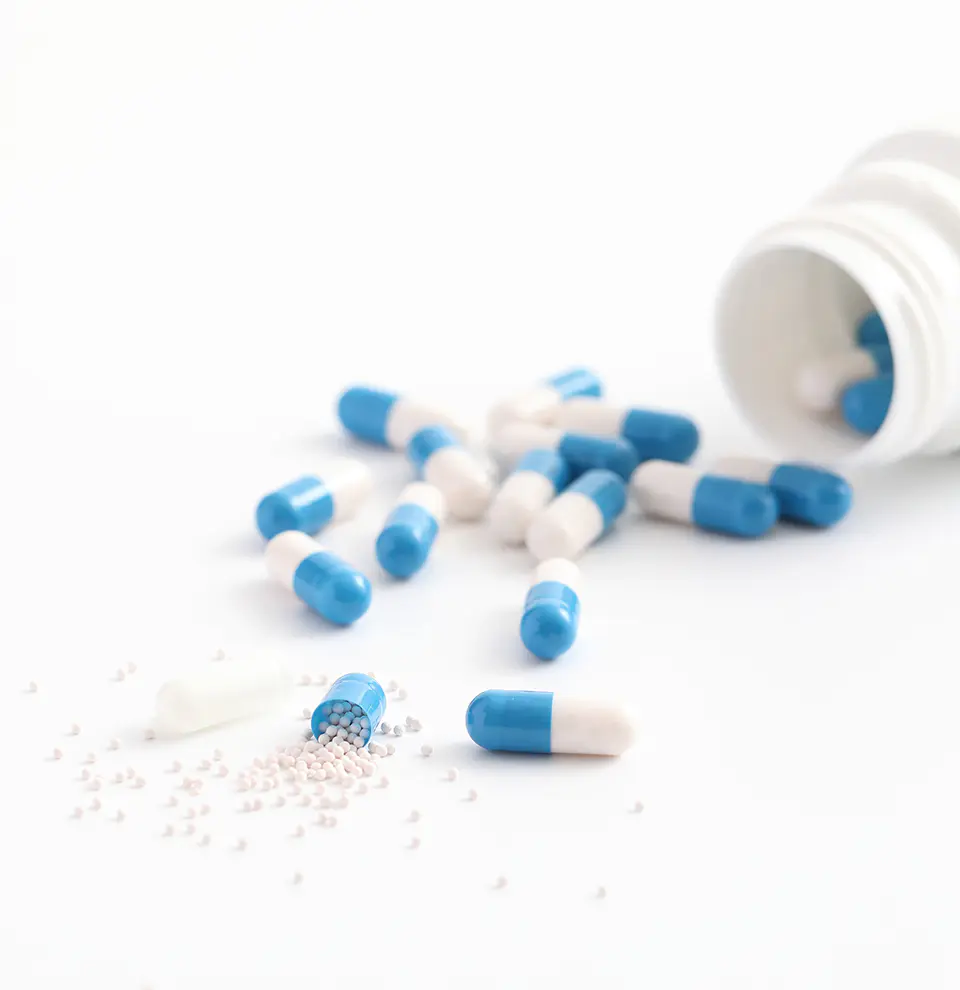
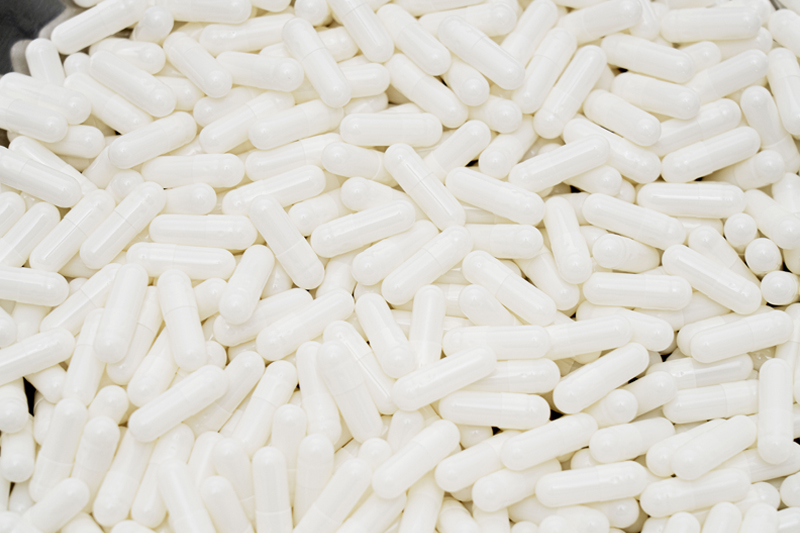
For a capsule-based DPI, the hard capsule shell is not a passive container; it is a critical part of the delivery system. The capsule is pierced or split open inside the device at the moment of inhalation, and the powder is dispersed through the inlet ports. If the capsule material is too brittle or too elastic, or if it releases moisture into the powder, the therapeutic effect can change. That is why selecting the right empty hard capsule is a decision that extends far beyond packaging—it is a drug delivery decision. High quality empty capsule
A dry powder inhaler is an inhalation device that stores medication as a dry powder formulation. When the patient inhales through the mouthpiece, the internal mechanism (a capsule, a blister, or a dosing chamber) releases the powder, which is then carried by the inhaled air stream deep into the lungs. There is no need for the patient to press a button or coordinate their breath with an aerosol spray—the DPI is entirely breath-activated.
Key facts to know upfront:
The simplest way to understand a DPI is to contrast it with an aerosol inhaler. In an aerosol pMDI, a pressurized gas releases a visible puff of mist. In a DPI, the patient feels only a gentle flow of air carrying the powder. The total delivered dose in a DPI is directly influenced by the patient’s inspiratory flow rate—which is why the device design and the powder formulation must be optimized for a real-world patient population.
The mechanism of a DPI can be described in four sequential steps. Understanding these steps is essential for both patients and for formulators who decide what powder to put inside the inhaler.
The most critical variable in the DPI mechanism is inspiratory flow rate. In one large real-world study, 23% of patients with COPD were unable to generate the minimum flow required for certain DPI devices. This variability means that the device and the powder formulation must work together to maximize the fine particle fraction—even when the patient has reduced lung function. The fine particle fraction (FPF) is the percentage of the emitted dose that is smaller than 5 micrometers and therefore reaches the deep lung. In high-performance DPIs, the FPF typically ranges from 20% to 45%, depending on the formulation and the device type.
According to a 2020 review in the Journal of Aerosol Medicine and Pulmonary Drug Delivery, the average fine particle fraction for modern capsule-based DPIs is around 30% to 40%, whereas older dry powder devices may deliver only 10% to 20%. This data underscores that the DPI is not a simple dispenser—it is a precision drug delivery tool.
There are three dominant technical categories of DPIs. Each has distinct advantages and limitations. The selection of one method over another is usually driven by the drug, the target patient population, and the required dose consistency.
| Type | Single-dose (capsule) | Multi-dose reservoir | Multi-dose blister (unit dose) |
|---|---|---|---|
| Dose delivery | One capsule per dose | Powder stored in a chamber | Individual foil blisters |
| Patient effort | High inspiratory flow required | Moderate flow needed | Moderate flow needed |
| Motivation/feedback | The capsule is visible | Dose counter helps | Dose counter helps |
| Moisture protection | Low (capsule is exposed) | Medium (sealed chamber) | High (foil individual) |
The capsule-based DPI deserves particular attention in the context of pharmaceutical manufacturing. In this design, a single hard gelatin or HPMC capsule is placed into the device before each use. Once the patient presses a button, the capsule is pierced, and the patient inhales. This design makes the capsule one of the most important components of the entire delivery chain.
One important practical detail: capsule-based DPIs require patients to load a fresh capsule before every dose. If the patient has reduced dexterity or memory impairment—common in older COPD patients—this is a practical limitation. On the other hand, capsule-based DPIs deliver exact, single-dose control, which is a real advantage in clinical trials and in treatments requiring flexible dosing.
In a capsule-based inhaler, the empty hard capsule performs at least five separate functions. It is not just a package. Each of these functions must be reliable for the drug to work correctly:
A 2019 study in Pharmaceutical Research found that the water content of hard gelatin shells at the time of filling can change the emitted dose of the DPI. In the study, capsules with a water content of 13.5% showed significantly higher emitted mass than capsules with only 9% water content. This is because moisture accelerates the inter-particle aggregation of the powder. This simple but vital fact shows that empty capsule quality is not a side issue—it is a core determinant of therapeutic performance.
At this point, any formulator or sourcing manager should be asking: "What capsule specification should I look for to optimize my DPI performance?" The answer is not a single "best" capsule, but a system-level choice that matches the physicochemical properties of the powder.
Patients and prescribers frequently ask which is better: a DPI or a pMDI. The answer depends on the individual patient’s ability to coordinate and generate sufficient inspiratory flow.
| Parameter | Dry Powder Inhaler | pMDI (Metered-Dose) |
|---|---|---|
| Need for coordination | No coordination required | Requires precise hand-breath timing |
| Propellant | None | HFA propellant |
| Inspiratory flow needed | Peak inspiratory flow > 30 L/min | Lower (10–30 L/min) |
| Environment impact | No greenhouse gas emissions | HFA is a potent greenhouse gas |
| Dose consistency variability | ± 15% due to flow rate | ± 10% when correctly used |
Another practical consideration is the environmental footprint. Metered-dose inhalers use hydrofluoroalkanes, which are powerful greenhouse gases; the Global Warming Potential (GWP) of a single pMDI can be equivalent to 500 kg of CO₂. In comparison, DPIs have near-zero global warming impact from propellant. A 2023 article in The BMJ estimated that switching all pMDI prescriptions in England to dry powder inhalers would reduce the country's annual carbon emissions by roughly 500,000 tonnes of CO₂ equivalent. This is an increasingly important argument for healthcare systems and procurement teams when deciding which inhaler type to include in their tenders.
To evaluate whether a DPI works properly, you need to look at three performance metrics. These are the same metrics used by regulators and by pharmaceutical companies during product development.
The minimum PIFR needed is different for each device. A well-designed DPI should work with a PIFR of 30 L/min, but many devices require 60–90 L/min for optimal operation. In one study of 1,208 patients with COPD, 23.7% of patients were unable to achieve the 60 L/min required for their device. This is a clinically significant finding because these patients would experience under-dosing even if they follow the instructions perfectly.
FPF is the proportion of particles smaller than 5 µm, which is the range that can reach the small airways. In most high-performance DPIs, the FPF is around 25–45% of the emitted dose. For example, a 2021 study published in the International Journal of Pharmaceutics measured an FPF of 42.3% for a novel capsule-based DPI compared to 28.1% for an existing multi-dose reservoir device. The capsule-based device outperformed because the capsule’s rotation inside the inhalation chamber created a favorable turbulent flow that broke up powder agglomerates.
The emitted dose is the amount of powder that actually leaves the mouthpiece. Dose uniformity across multiple actuations is required to be within ±15% for capsules in a single delivery system. High-performance capsule shells with tight dimensional tolerances (wall thickness variation ±0.02 mm) help ensure consistent puncture and consistent powder evacuation.
The production process for pharmaceutical hard capsules involves dipping pins into a molten gelatin or HPMC solution, then drying, trimming, and joining the cap and body. For inhalation-grade capsules, additional pharmaceutical-grade requirements are applied.
Here are the main process stages and the critical parameters in capsule manufacturing for DPI applications:
In DPI applications, the water vapor transmission rate (WVTR) of the finished capsule is a key metric. It is the rate at which moisture passes through the capsule wall into the powder. For a standard gelatin capsule, the WVTR at 23°C and 55% RH is often 0.15 g/(m²·day). For an HPMC capsule, it is slightly higher, around 0.25 g/(m²·day), but the initial moisture content is much lower. These laboratory values—from American capsule supplier technical data—are measurable and reproducible.
This is a practical question that many R&D scientists and procurement managers face. There is no universal answer; it depends on the specific powder in the DPI and on the storage conditions the product will experience.
Let’s look at the engineering data and operational differences side by side.
| Property | Gelatin (Animal origin) | HPMC (Vegetable origin) |
|---|---|---|
| Moisture content at filling | 12–15% | 3–6% |
| Water vapor transmission rate | Lower | Slightly higher |
| Elasticity | High (more flexible) | Moderate (less flexible) |
| Propensity to cross-link | Medium (both gelatin and HPMC can cross-link with excipients) | Lower |
| Suitability for hygroscopic powders | Requires special handling; moisture may react | Better in many cases |
| Vegetarian/patient preference | Not suitable for vegetarians or certain religious/ethical preferences | Suitable |
One important insight from industry experience: when a dry powder formulation has a high moisture-sensitive API (like budesonide or salmeterol), the internal moisture of the capsule at the moment of filling is one of the most critical factors. Because HPMC capsules have a lower residual moisture (typically 3–6% compared to gelatin’s 12–15%), they are a safer starting point for extremely moisture-sensitive powder blends.
However, gelatin capsules have lower water vapor permeability and better mechanical resilience. If your powder is not strongly hygroscopic, gelatin may provide superior protection against ambient humidity during storage. This is the kind of trade-off that can be resolved only with a real stability study.
If you are a pharmaceutical company, a contract manufacturer, or a startup developing a new capsule-based DPI, here are the most important risks and the practical steps you should consider before placing an order for empty hard capsules.
A variation in the capsule diameter of even 0.1 mm can cause feeding issues in automated filling machines. For a capsule DPI, the internal chamber diameter may be tightly machined to accept a specific capsule size. Always ask the manufacturer for the actual dimensional specification sheet before doing any full-scale trial.
Request the value and the test method. The recommended method is Karl Fischer titration for water content determination. Many high-quality suppliers can now provide certificates of analysis (CoA) with each production batch.
Wall thickness variation affects how evenly the capsule is punctured. If one side of the capsule wall is thinner than 0.08 mm, the laser or needle may break the shell into tiny fragments. A reliable capsule manufacturer should be able to provide a dimensional report with a standard deviation of less than 0.015 mm in wall thickness.
In short, you are not simply buying a box of capsules. You are buying a reproducible, measurable, and pharmaceutical-grade component that must remain stable under varying temperature and humidity conditions.
The following questions come from the most common inquiries made by patients, caregivers, and healthcare professionals. The answers are concise and directed at practical use.
Yes. Many DPIs are approved for both conditions. The mechanism is identical—the drug is delivered to the lungs, whether it is an anti-inflammatory (e.g., budesonide) or a bronchodilator (e.g., formoterol). The main difference is the disease pathology and the patient’s inspiratory flow. Some COPD patients have very low inspiratory flow, which means the DPI must be selected with care.
It depends on the device. Some DPIs are designed so that a single breath delivers the entire dose. Others, particularly older models, may require two or three additional breaths to ensure that all the powder is dispensed. Always check the leaflet supplied with your inhaler.
No. The capsule is placed inside the device and remains in the inhalation chamber. After inhaling, the patient opens the device and removes the empty capsule shell. It is not swallowed. The only thing that enters the lungs is the fine powder itself.
You may receive a reduced dose. Research indicates that a peak inspiratory flow of less than 30 L/min can reduce the fine particle fraction by more than 40%. In such cases, your physician may prescribe a different inhaler type, such as a pMDI with a spacer or a soft mist inhaler.
No. High humidity can cause the dry powder to absorb moisture and form aggregates, significantly reducing the emitted dose. Store your DPI at room temperature in a dry location, and keep it away from moisture and direct heat.
A single-use capsule DPI device is generally designed to be reusable for 12 to 24 months of regular use. However, the device can wear out over time, especially the piercing mechanism. If you notice that the powder remains inside the capsule after inhaling, you should replace the device.
Yes. DPIs do not contain hydrofluoroalkane propellants, which are potent greenhouse gases. A 2023 study in The BMJ emphasized that switching even 50% of metered-dose inhaler prescriptions to dry powder inhalers in the UK would cut carbon emissions by approximately 344,000 tonnes CO₂-equivalent per year.
Gelatin capsules are animal-derived and have a higher initial moisture content, which may be an issue for hygroscopic powders. HPMC capsules are plant-sourced and have lower initial moisture, which is often preferable for dry powder formulations. However, gelatin has better water vapor barrier properties. The choice should be based on the specific drug formulation and the target stability profile.
Dry powder inhalers are among the most sophisticated and effective drug delivery systems available, offering a propellant-free, breath-actuated, and environmentally sustainable approach to pulmonary therapy. Yet their performance is not solely determined by the device design—it is also influenced very strongly by the empty hard capsule that serves as both the powder reservoir and a functional element in the delivery mechanism.
If you are developing a DPI product, the first step is to characterize your powder formulation against the three key metrics—inspiratory flow, fine particle fraction, and emitted dose uniformity. Next, you must select the capsule shell that can consistently deliver the required performance specification under real-world conditions. This means asking tough questions of your capsule supplier: What is the exact moisture content in each batch? What is the tolerance on wall thickness? Have you tested the capsule for puncture behavior with a DPI-type device?
For sourcing teams, the responsible decision is to choose a capsule manufacturer with verified dimensional control, reliable moisture specifications, and clear per-batch quality documentation. A thoughtful supplier can help you navigate the trade-offs between gelatin and HPMC, match a capsule size to your device chamber, and ensure that the shell itself does not compromise the quality of the drug.
Your email address will not be published. Required fields are marked *
If you would like to learn more about our products, please feel free to contact us and we will do our to assist you.
Copyright © Shaoxing Zhongya Capsule Co., Ltd. High Quality Empty Capsule Manufacturers Wholesale Transparent Empty Capsule Factory
All Rights Reserved.

