 English
 中文简体
中文简体 русский
Product Consultation
Your email address will not be published. Required fields are marked *

Content
A solvate is a crystalline solid in which solvent molecules are trapped inside the crystal lattice of another compound. The compound can be an active pharmaceutical ingredient, an excipient, or any solid raw material used in a capsule formulation. In pharmaceutical and nutraceutical manufacturing, most solvates are hydrates, meaning the solvent is water. The term solvate is not used to describe the empty capsule shell itself; it describes the chemistry of the powder that you fill into the capsule.
The practical impact is simple. When a solid forms a solvate, its dissolution rate, melting point, solubility, chemical stability, and flow behavior can all change. For example, a hydrate can be more stable during storage but dissolve more slowly than its anhydrous form. An anhydrous form can dissolve faster but may pick up moisture from the air and convert into a hydrate. That conversion is exactly the type of problem that affects the interaction between a solvate-containing fill powder and the empty capsule shell.
During capsule filling, water activity in the fill material and the shell material must be managed together. If the powder is a hydrate and the shell is gelatin, the gelatin shell already contains a meaningful amount of water. The result can be moisture migration, crystal form conversion, or a change in dissolution performance. This is not an academic issue. It is a real root cause of batch failures in nutraceutical and pharmaceutical production.
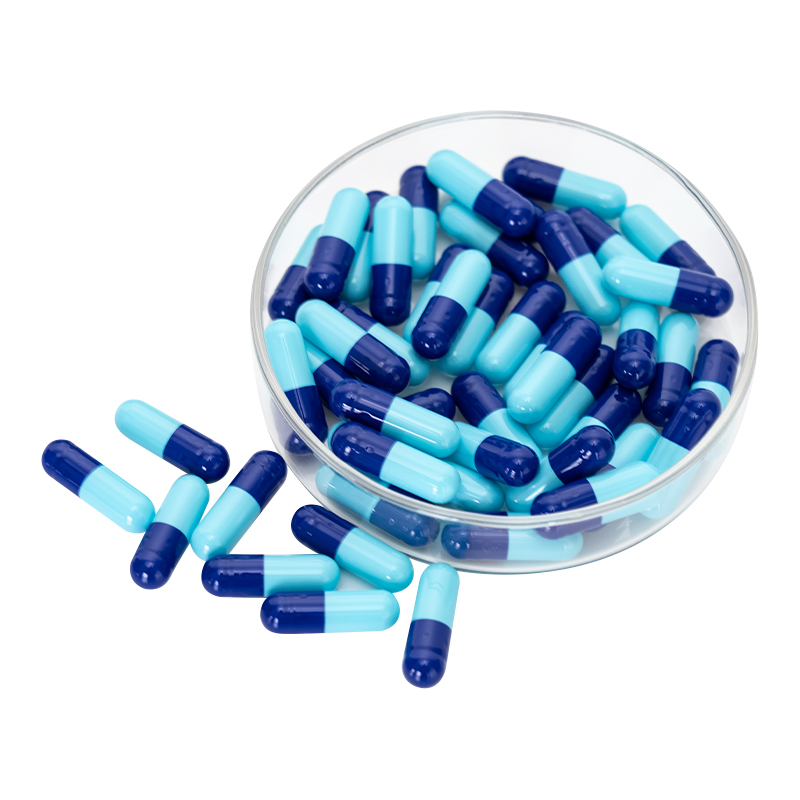
 HPMC Empty Capsules for Moisture-Sensitive FormulationsVegetable-based HPMC capsules resist moisture and heat, making them suitable for formulations where water activity must be controlled. They are ideal for vegetarian or religious dietary needs and help prevent crystal form changes.View Product →
Use precise vocabulary because these terms are often mixed up in procurement discussions. A hydrate is always a solvate, but not every solvate is a hydrate. An anhydrous form has no solvent in its crystal lattice.
| Term | Solvent in lattice | Typical impact in capsule filling |
|---|---|---|
| Solvate | Yes, any solvent | Alters dissolution, stability, and shell compatibility |
| Hydrate | Water only | Often better storage stability but slower dissolution |
| Anhydrous | None | Often faster dissolution but more hygroscopic |
For a 1:1 hydrate, one water molecule is bound to each molecule of the compound. A 1:2 solvate contains two solvent molecules per host molecule. These ratios matter because they change the physical properties of the material. A monohydrate can behave completely differently from a hemihydrate or an anhydrous form of the same API.
Pharmaceutical literature has documented this for decades. A well-known review by Vippagunta, Brittain, and Grant in Advanced Drug Delivery Reviews (2001) describes how solvates and hydrates can improve or degrade the properties of a drug substance. The review remains a common reference because it explains the thermodynamic relationship between solvation and crystal packing. When you evaluate a fill powder, ask the ingredient supplier whether the stated purity refers to the anhydrous, hydrate, or solvate form. The difference can affect your fill weight calculation significantly.
First, define the problem. A capsule contains two materials: the fill powder and the shell. The fill powder can be a solvate. The shell is not. If you ignore the solvate form, you may see dissolution failures, hardness changes, or instability during shelf life.
Many APIs in early development are isolated as solvates because the solvent is used during purification. Ethanol solvates and acetone solvates are common in development. When the development team says the API is non-solvated, they often mean that after drying. If the drying step is incomplete, residual solvent remains in the lattice and can migrate into the capsule shell over time. That can affect the mechanical strength of the shell and the release profile of the product.
From a purchasing perspective, you need to ask whether the specification includes a solvate ratio. For example, a specification that says monohydrate with 4.5 percent water is different from an amorphous material with 4.5 percent water. The solvate has water inside the lattice. The amorphous material has water loosely bound. The two behave differently in a capsule. The amorphous form may absorb additional moisture from the shell, while the hydrated form may release water into the shell.
This is why HPMC capsules are often chosen when the API is a moisture-sensitive hydrate. HPMC shells have a lower moisture content than gelatin shells, which can reduce the risk of moisture transfer between the shell and the fill powder. Lower moisture transfer means the solvate form is more likely to remain unchanged during filling, packing, and distribution.
HPMC Empty Capsules for Moisture-Sensitive FormulationsVegetable-based HPMC capsules resist moisture and heat, making them suitable for formulations where water activity must be controlled. They are ideal for vegetarian or religious dietary needs and help prevent crystal form changes.View Product →Not all empty capsule shells behave the same way. Gelatin shells and HPMC shells have different moisture profiles. That difference is directly relevant for any product with a solvate or hydrate in the fill.
| Property | Gelatin shell | HPMC shell |
|---|---|---|
| Typical shell moisture | 12 to 16 percent | 4 to 7 percent |
| Moisture transfer risk with hydrates | Higher | Lower |
| Dissolution in gastric juice | Fast and widely predictable | More tunable, often controllable |
| Suitability for moisture-sensitive solvates | Needs careful packaging and humidity control | Often preferred |
For gelatin capsules, the shell itself contains water. If the fill powder is a solvate with low water activity, moisture can move from the shell into the fill. This can raise the water activity inside the fill and promote crystal form conversion. For HPMC capsules, the lower shell moisture provides a more stable environment for a moisture-sensitive solvate. The factors affecting dissolution performance are well documented, and shell selection is one of them. Read our article on factors affecting dissolution performance for more detail.
Gelatin still has an important role. It is often preferred for products that are not moisture-sensitive or when a traditional, rapid disintegration profile is required. If your API is an anhydrous form and you want to keep it that way, a gelatin shell can be suitable, but you must control the relative humidity of the filling room and use effective moisture-barrier packaging.
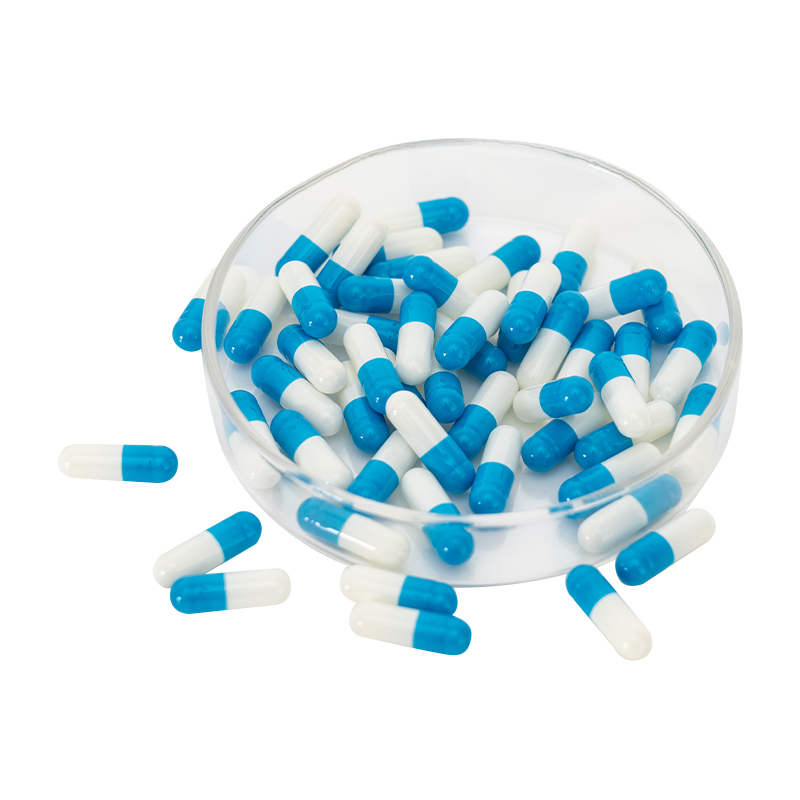
 Gelatin Capsules for Traditional Rapid DisintegrationClassic gelatin capsules dissolve quickly and are cost-effective for non-moisture-sensitive products. They offer high biocompatibility and are widely used in pharmaceuticals, though not suitable for vegetarians.View Product →
When you source empty capsules for a formulation that contains a solvate or hydrate, the conversation with your supplier should include a set of specific questions. A capsule that is not matched to the fill chemistry can cost you production time and shelf life.
Each item has a measurable effect. For example, a formulation that uses a monohydrate at 5 percent water by weight will need a larger fill weight than the same API in anhydrous form if you want the same dose of active molecule. If you calculate the dose based only on anhydrous weight, the batch will fail potency.
At Vivacaps, we evaluate capsule shell compatibility with the help of our advanced capsule chemistry laboratory. This is where shell moisture, dissolution behavior, and fill interactions are considered together. When you are looking at an API with a known solvate or hydrate form, ask about the exact water activity in the final capsule system rather than relying only on the water content in the powder.
A solvate is a solid in which solvent molecules are built into the crystal lattice. It is not a simple mixture. It is a distinct crystalline phase with its own thermal, solubility, and mechanical properties.
Yes. A hydrate is a solvate where the solvent is water. It is the most common solvate in pharmaceutical work because water is used in many purification processes. Other solvents such as ethanol and acetone can also form solvates.
No. Gelatin and HPMC shells contain water as a plasticizer, but that does not make them solvates. The shell is a polymer system, not a crystalline compound with solvent inside the lattice.
Because the crystal lattice has a different packing energy. When the solvent leaves the lattice, it can leave behind a high-energy surface or a different polymorph. That can change how quickly the drug dissolves. In a capsule, the shell disintegrates first, then the fill dissolves. If the fill has changed form, the release curve changes.
No. High humidity can push water into the shell and then into the fill. If the fill is an anhydrous form, it can convert to a hydrate. If the fill is a hydrate, it can become overhydrated or change its crystal packing. A dry, sealed package is the safer option.
HPMC capsules are usually the stronger choice when the solvate is moisture-sensitive. They have lower shell moisture and less susceptibility to water exchange with the fill. Gelatin remains a good choice for many non-moisture-sensitive products and for traditional rapid-release needs.
Often yes. If the fill weight changes because of hydrate water, the required volume changes. Choose a capsule size that fits the dose after considering the solvate ratio, not before.
Your email address will not be published. Required fields are marked *
If you would like to learn more about our products, please feel free to contact us and we will do our to assist you.
Copyright © Shaoxing Zhongya Capsule Co., Ltd. High Quality Empty Capsule Manufacturers Wholesale Transparent Empty Capsule Factory
All Rights Reserved.

