
 English
 中文简体
 русский
Product Consultation
Your email address will not be published. Required fields are marked *

Content
A brand manager sends a brief that reads like this: vegan, halal-friendly, 500 mg botanical blend, 60 capsules per bottle, two capsules a day, aimed at women between 45 and 55. The ingredient list takes the entire meeting. The capsule shell takes none of it, even though that shell decides whether the blend opens up in the stomach, whether it survives a humid warehouse in July, and whether the vegan claim actually holds up on the label.
The direct answer: for a hot flash supplement, pick a plant-based HPMC shell when the formula contains hygroscopic extracts or when vegan, vegetarian or halal positioning matters. Stay with gelatin when the fill is a simple, dense botanical powder and unit cost drives the decision. Switch to a pearl shell when shelf presence in the women's health aisle is the commercial priority. The rest of this page explains why, with the numbers behind each choice.
Two things make this topic worth an hour of a product team's time. First, the clinical effect size in the menopause category is small, so delivery losses hurt more than they would in a high-dose category. Second, the fill materials used in hot flash formulas are unusually awkward: sticky extracts, oily liquids, and micro-doses measured in single milligrams.
The ingredient list across the menopause support category is fairly predictable: soy isoflavones, red clover isoflavones, black cohosh root extract, sage leaf extract, rhapontic rhubarb extract, rye pollen extract, evening primrose oil, flaxseed lignans, vitamin E and vitamin B6. Daily amounts used in published trials vary widely. Isoflavone extracts are commonly studied at 40 to 80 mg per day, black cohosh at 40 to 128 mg, sage extract at 300 to 600 mg, rhapontic rhubarb special extract at around 4 mg, and rye pollen extract at 160 to 240 mg.
An honest look at the evidence matters here. A Cochrane review of black cohosh for menopausal symptoms (Leach and Moore, Cochrane Database of Systematic Reviews, 2012) concluded there was insufficient evidence to support its use. Meta-analyses of isoflavone supplementation report reductions of roughly one to two fewer hot flashes per day against placebo. That is a modest signal, and modest signals are fragile: if the shell holds the powder too tightly, traps moisture, or slows release, a small measured benefit can shrink to nothing.
What rarely gets discussed is how differently these ingredients behave inside a two-piece shell. Some are fine, static-prone powders. Some are oils that must be absorbed onto a carrier or sealed into a banded capsule. Some are dosed so low that the diluent and the blend uniformity become the real engineering problem, not the active itself.
| Ingredient group | Usual form in the shell | Behaviour that affects shell choice |
|---|---|---|
| Soy and red clover isoflavone extracts | Fine hygroscopic powder, 40 to 80 mg | Draws moisture from the shell wall, cakes during filling and storage |
| Black cohosh root extract | Dry powder or granule, 40 to 128 mg | Residual aldehydes in oxidized extracts can cross-link gelatin |
| Sage leaf extract | Bulky powder, 300 to 600 mg | Needs a large shell, or two smaller shells per dose |
| Rhapontic rhubarb extract | Micro-dose, around 4 mg | Requires a diluent and tight fill-weight control |
| Evening primrose oil | Liquid, 500 to 3000 mg | Needs sealing, banding or a softgel format |
| Rye pollen extract | Fine powder, 160 to 240 mg | Static and dusting disturb fill-weight uniformity |
A gelatin shell equilibrates at roughly 12.5 to 16.5 percent water by weight, while an HPMC shell sits near 4 to 7 percent. Put a hygroscopic isoflavone extract into a shell that carries 13 percent moisture and the wall starts donating water to the powder the moment the capsule is closed. In an accelerated stability chamber at 30 degrees C and 65 percent relative humidity, that exchange shows up within about 12 weeks as brittle shells in the bottle and a caked, poorly flowing fill inside. An HPMC wall with a lower moisture floor leaves much less room for that migration.
Gelatin reacts with aldehydes. Botanical extracts that have picked up oxidation products during drying, or blends containing reducing sugars, can trigger a cross-linking reaction that tightens the shell wall over time. The symptom is unpleasant for a product team: dissolution results pass at release and then fall out of specification at month three or month six of a stability study, with no change to the formula itself. HPMC does not carry that chemistry, which is one reason formulators move sticky botanical blends into plant shells early rather than after a failed batch.
Hard capsules are normally tested at 37 degrees C in water or simulated gastric fluid. The pharmacopoeial limit for hard capsules is 30 minutes, and a well-made shell opens far sooner, typically within 5 to 15 minutes. The interesting part is what happens after the shell opens. A hydrophobic fill, such as an oil absorbed onto a carrier, can sit as a plug and release slowly. Adding a disintegrant at 2 to 5 percent, or switching to a shell with a faster rupture profile, often does more for the release curve than reformulating the actives.
For most new hot flash formulas, the practical recommendation is a plant-based HPMC shell: lower moisture, no aldehyde cross-linking route, and no animal-derived input to explain on the label.
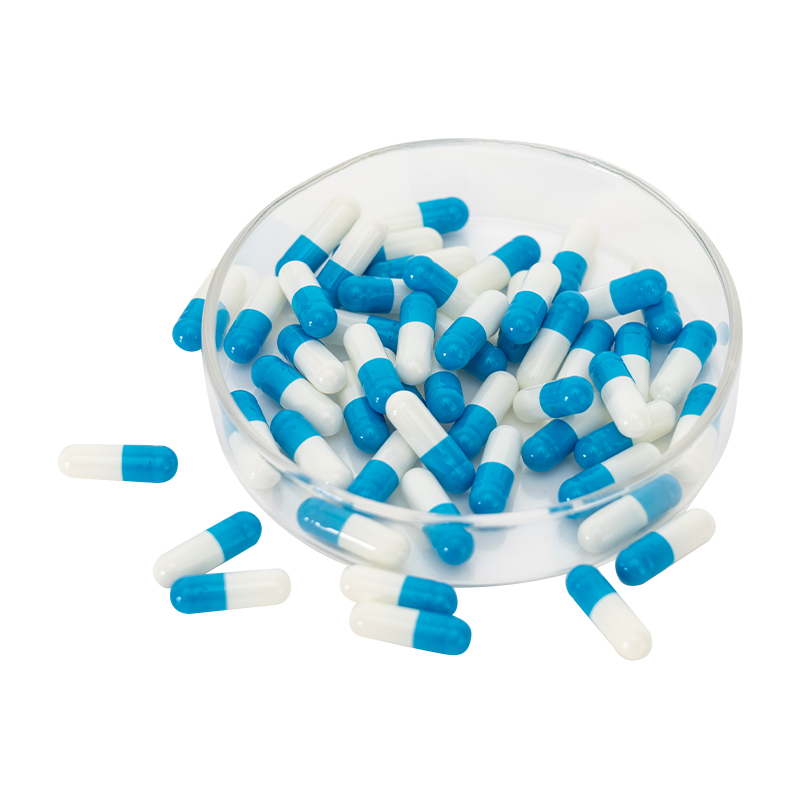
 HPMC capsuleMain Ingredient: HPMCView Product →
Capsule size is a volume decision, not a weight decision. Botanical extracts usually run between 0.4 and 0.8 g per mL in bulk density, so the same shell can hold 270 mg of a fluffy sage extract or 600 mg of a dense mineral blend. Typical usable volumes are shown below, assuming a standard powder fill and a normal closing tolerance.
Work through a real example. A two-capsule-per-day regimen using size 0 shells at a bulk density of 0.55 g per mL gives roughly 370 mg per shell, or 740 mg per day. That headroom covers 600 mg of sage extract, 80 mg of soy isoflavones and still leaves room for a small amount of lubricant. If the target dose is 500 mg twice a day, the same project needs size 00 or an elongated shell instead, because squeezing an oversized fill into a small shell costs you weight uniformity and creates rejects on the filling line.
The elongated formats deserve a mention for this category specifically. Women in their late forties and fifties are often the least enthusiastic audience for a large, hard-to-swallow capsule, and an elongated shell adds volume without widening the body. It is one of the cheapest adherence improvements available. Teams that want to dig into the dosage side of this trade-off can review how capsule format affects dosage precision before locking a fill weight.
The menopause shopper is, on average, a woman over 45 who reads labels closely. A growing share of that audience avoids animal-derived ingredients, and a substantial share wants products that fit Muslim dietary practice. Both filters land on the same component: the shell.
A mistake worth avoiding: choosing a plant shell for marketing reasons and then filling it on a line configured only for gelatin. Processing behaviour differs, and the change should be validated with your own blend rather than assumed from a generic spec sheet.
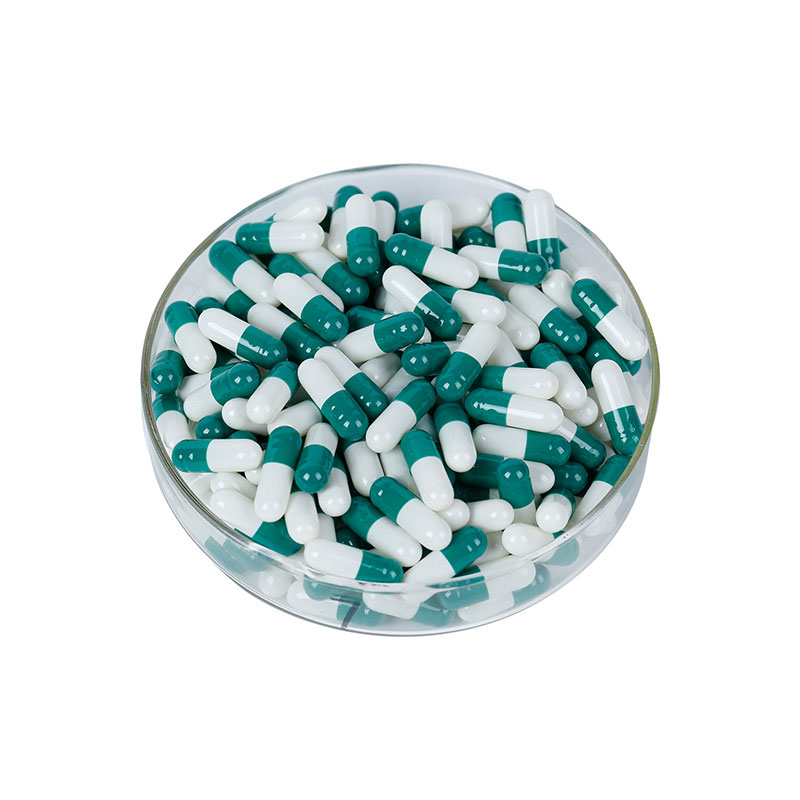
 HALAL CapsuleMain Ingredients: Use gelatin or plant-based ingredients that comply with Islamic Halal certificationView Product →
Most menopause products are sold in a crowded aisle where the bottle has about two seconds to make an impression. Pearl capsules were developed with that reality in mind: a shell style designed for women's health and beauty-from-within products, where a soft, glossy appearance signals care and quality rather than clinical sterility.
The commercial logic is simple. Adherence in a daily supplement depends partly on how the product feels in the hand. A two-capsule daily regimen for six weeks is 84 swallowing events, and a shell that looks premium changes how people talk about the product in reviews and unboxing posts.
One practical warning. Appearance should never be the only selection criterion. Whatever the finish looks like, the moisture content, rupture time, fill-weight tolerance and colour fastness under light still have to be verified against the same standards you apply to a plain shell. Ask for the technical data, not just the product photograph.
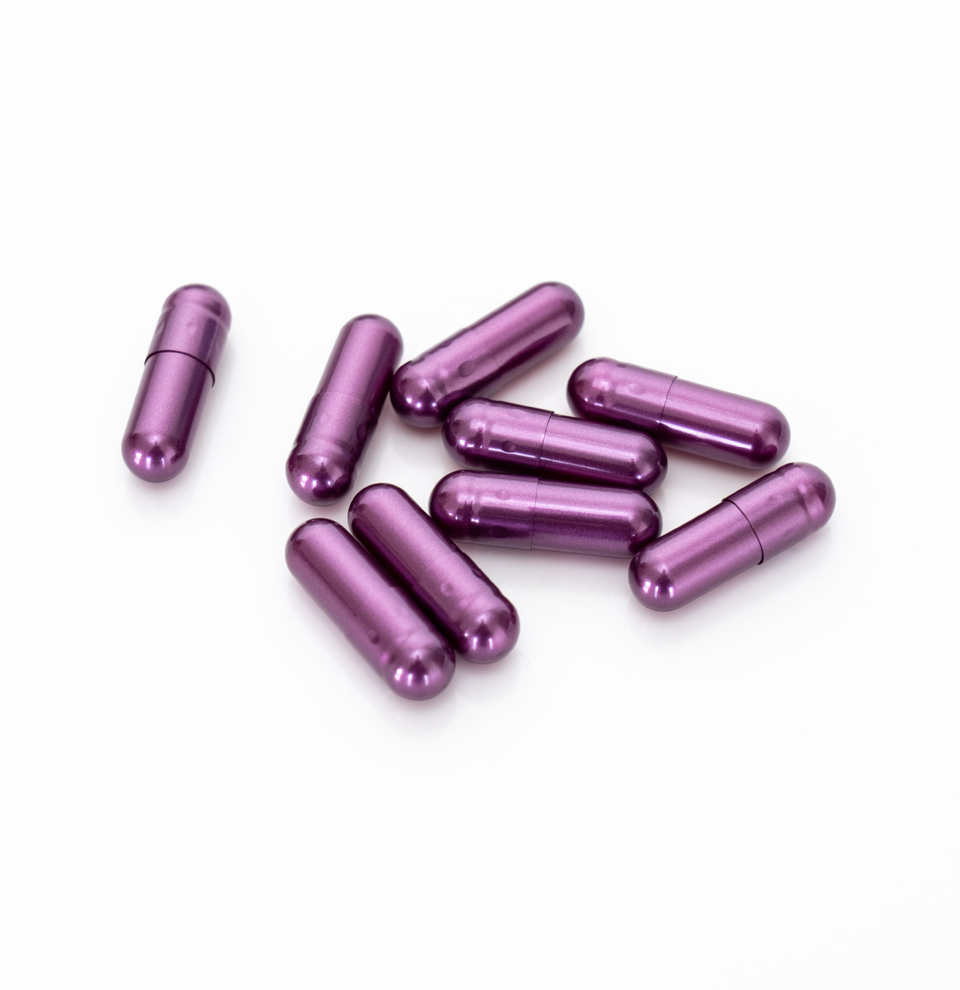 Pearl capsuleMain Ingredients: Pearl powder+gelatin or plant-based capsulesView Product →
Filling a botanical blend into a two-piece shell looks simple and is not. The filling room should sit around 45 to 55 percent relative humidity and 20 to 25 degrees C. Too dry and the shells turn brittle and crack at the joint; too humid and the powder sticks to the pins and the fill weight wanders. Aim for a weight variation of about plus or minus 3 percent across the batch, and use a lubricant at roughly 0.5 to 1 percent of the blend, with a plant-based option if the vegan claim has to hold.
On the testing side, the minimum package for a hot flash capsule project includes assay, dissolution, disintegration, moisture content and microbiological limits at release, followed by accelerated stability at 40 degrees C and 75 percent relative humidity for six months and real-time data at 25 degrees C and 60 percent relative humidity out to 24 months. Because botanical actives in this category are typically natural extracts with variable marker content, also agree on the marker compound and its acceptable range before the first commercial batch.
Where a supplier has its own chemistry bench, compatibility work gets much faster. Running moisture uptake, blend flow and rupture testing in-house, on your actual formula rather than a placebo, is the cheapest risk reduction available at this stage. Suppliers with a dedicated capsule chemistry laboratory can typically return a compatibility verdict before tooling or artwork is committed.
Scale also matters when a launch succeeds quickly. Volume producers running eight shell sizes, including elongated formats, with automated lines and output measured in billions of capsules per year, can absorb a sudden reorder. A supplier with one or two sizes and manual printing will not.
Work through these items before signing a purchase order. Each one has caused a delayed launch somewhere in this category.
For most modern formulas, an HPMC shell is the safer default. It holds less moisture, avoids the aldehyde cross-linking route that troubles gelatin, and supports vegan and halal positioning without extra explanation. Gelatin still works well for simple, dense botanical powders where cost per capsule is the deciding factor.
Not automatically. The real advantage of a capsule is that the fill does not need compression. Extracts that would be destroyed or discoloured by compression force, or that need to be blended with oils, fit more naturally into a two-piece shell. Tablets can match or beat capsules on release speed when they are properly formulated.
Yes, but not into a standard unsealed shell. Liquids need either a softgel format or a hard capsule filled with oil and then sealed or banded, and the shell must tolerate the oil without softening. At 500 to 3000 mg per day, most evening primrose products end up as softgels or as oil absorbed onto a powder carrier.
Size 0 has a usable volume of about 0.68 mL. At a bulk density of 0.5 g per mL that is roughly 340 mg; at 0.8 g per mL it is closer to 540 mg. Always ask for a fill trial with your own blend, because the same extract from two suppliers can differ by 20 percent in density.
Yes. HPMC shells contain no animal-derived material, which removes the most common obstacle to a vegan claim in a capsule product. Remember to check the rest of the formula too, including the lubricant and any colourant used in the shell.
The regulatory limit for hard capsules is 30 minutes at 37 degrees C, and a well-made shell typically opens within 5 to 15 minutes. What matters more for this category is how the fill behaves after opening, since hydrophobic or waxy blends can release slowly even from a fast-rupturing shell.
In this category, brittleness almost always comes from moisture migration. A hygroscopic extract pulls water out of a gelatin wall, and the shell loses the plasticiser effect that water provides. Low-humidity storage below about 35 percent relative humidity can cause the same problem in the opposite direction.
Run a short compatibility study with the real blend: fill the candidate shells, store them at accelerated conditions for four to eight weeks, then check moisture content, rupture time, appearance and marker assay. That single study usually reveals whether the shell or the formula is the weak point, before any tooling, printing or packaging commitment is made.
The pattern across successful hot flash launches is consistent. The team settles the daily dose, measures the real bulk density of the blend, picks a shell material based on moisture behaviour and consumer filters rather than habit, and validates the whole combination with a short stability study before committing to packaging. That sequence costs a few weeks and saves the far more expensive situation of a formula that passes on paper and fails at month three.
A capsule shell is roughly a few percent of the total product cost and close to a hundred percent of the delivery mechanism. Treat it as a formulation decision, and the modest effect sizes available in this category stay where they belong: inside the customer's body, not stuck in a shell that never opened properly.
Your email address will not be published. Required fields are marked *
If you would like to learn more about our products, please feel free to contact us and we will do our to assist you.
Copyright © Shaoxing Zhongya Capsule Co., Ltd. High Quality Empty Capsule Manufacturers Wholesale Transparent Empty Capsule Factory
All Rights Reserved.

