
 English
 中文简体
中文简体 русский
Product Consultation
Your email address will not be published. Required fields are marked *

Content
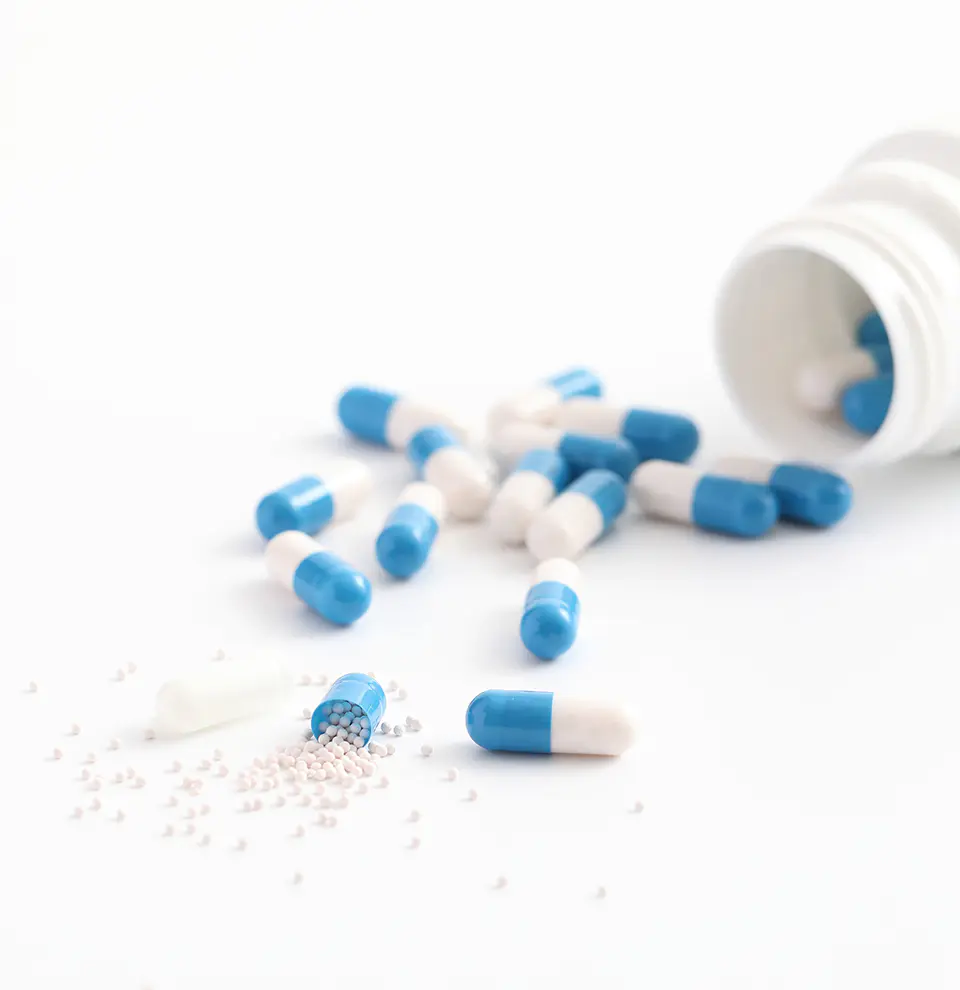
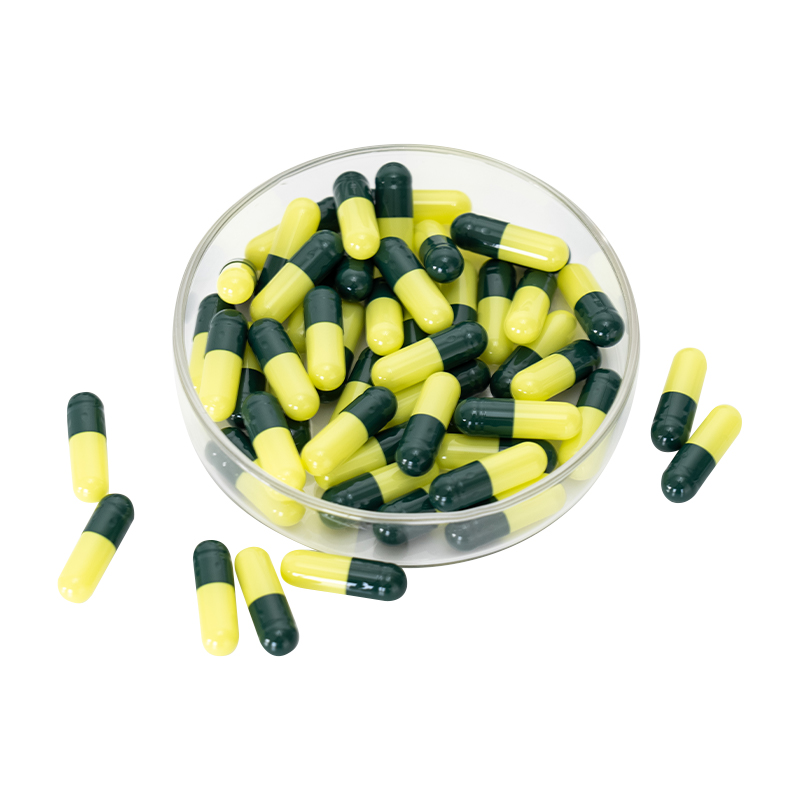
A pill capsule is a shell — usually made of gelatin or hydroxypropyl methylcellulose (HPMC) — that holds a measured dose of medication or supplement inside. When you swallow it, the shell dissolves in the gastrointestinal tract, releasing the contents at a controlled rate so the body can absorb them. The capsule does not just make swallowing easier. It protects the contents from moisture, oxygen, and stomach acid, masks unpleasant taste or smell, and can be engineered to release the drug at a specific location in the digestive system — whether that's the stomach, the small intestine, or the colon.
This mechanism sounds simple, but the engineering behind modern capsules involves precise material science, dissolution chemistry, and an understanding of how the human gut behaves under different conditions. The type of capsule shell material, its thickness, and any coatings applied to it all determine when and where a drug gets released — and that timing can be the difference between a drug working effectively and causing side effects or failing to absorb at all.
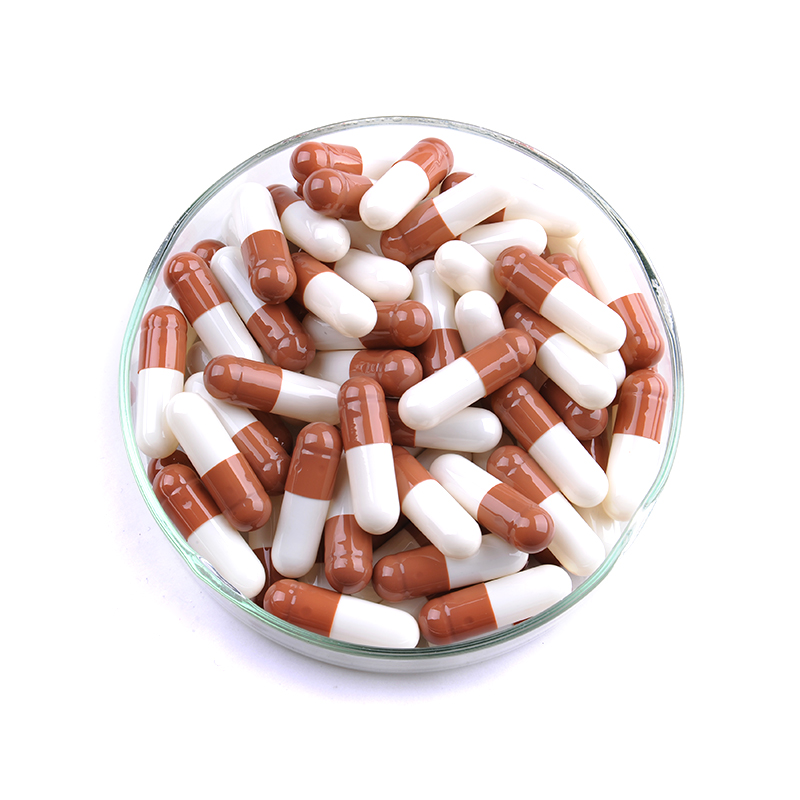
Every capsule has two main parts: a body and a cap. The cap fits over the open end of the body and is slightly wider. Together, they create a sealed unit. Capsules come in standardized sizes, numbered from 000 (the largest, holding around 950 mg of powder) down to 5 (the smallest, holding around 130 mg). For reference, a size 0 capsule — one of the most commonly used in consumer supplements — holds roughly 680 mg of powder.
Inside the capsule shell, manufacturers can place:
The shell itself is typically 0.08 to 0.12 mm thick. That thin wall is all that stands between the medication and the outside environment — which is why the material used to make it matters enormously.
For most of the 20th century, capsule shells were made almost exclusively from gelatin — a protein derived from the collagen in animal hides, bones, and connective tissue, primarily from bovine (cow) or porcine (pig) sources. Gelatin became the dominant material because it dissolves quickly in warm water, forms a reliable seal, and is inexpensive to manufacture at scale.
A standard gelatin capsule placed in the stomach typically begins to dissolve within 3 to 5 minutes of contact with gastric fluid. The full dissolution and drug release process usually completes within 15 to 30 minutes under normal conditions. That rapid dissolution is a feature for most immediate-release drugs — it gets medication into the bloodstream quickly.
However, gelatin has well-known limitations:
These drawbacks are what drove the development of plant-based alternatives, most prominently HPMC capsules.
HPMC — hydroxypropyl methylcellulose — is a cellulose derivative made from plant fiber. It forms the basis of the vegetarian capsule, also marketed under trade names like Vcaps (by Lonza) and Quali-V. An HPMC capsule functions on the same basic principle as a gelatin capsule: it dissolves in aqueous fluid and releases its contents. But the mechanism is chemically different, and that difference has practical consequences for both manufacturers and consumers.
HPMC does not dissolve the way gelatin does. Instead of melting and breaking apart rapidly in warm liquid, HPMC undergoes a sol-gel transition — it softens, swells, and gradually opens as the shell absorbs moisture. This means an HPMC capsule typically takes 20 to 30 minutes longer to fully open than a comparable gelatin capsule under identical conditions. For most immediate-release formulations, this difference is clinically insignificant. But for formulations where rapid peak plasma concentration matters — certain analgesics, for example — the difference can be relevant.
The nutraceutical and dietary supplement industry has largely shifted toward HPMC capsule formats over the past two decades. Products like fish oil alternatives, probiotic blends, herbal extracts, and antioxidant supplements frequently use HPMC shells because of the stability benefits. In pharmaceutical applications, HPMC capsules are preferred for moisture-sensitive APIs (active pharmaceutical ingredients), formulations targeting religious or dietary-restricted patient populations, and in modified-release systems that require predictable, consistent gel formation.
| Property | Gelatin Capsule | HPMC Capsule |
|---|---|---|
| Source | Bovine or porcine collagen | Plant cellulose |
| Typical moisture content | 13%–16% | 2%–6% |
| Dissolution onset (in gastric fluid) | 3–5 minutes | 20–30 minutes (slower onset) |
| Cross-linking risk | Yes | No |
| Suitable for vegans | No | Yes |
| Humidity tolerance range | Narrow | Wide (10%–75% RH) |
| Typical cost | Lower | Higher (approx. 20%–30% more) |
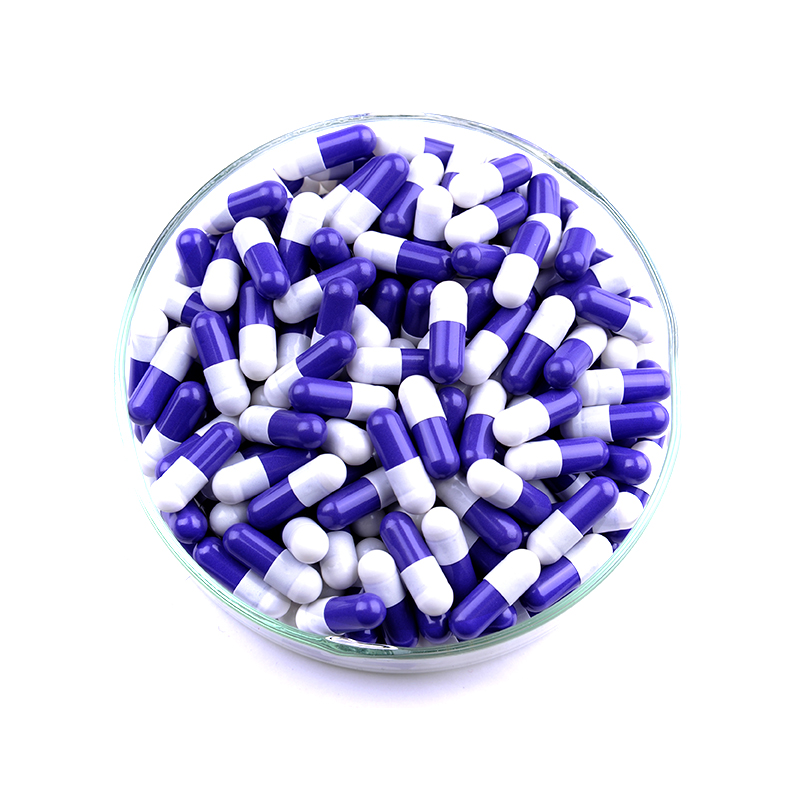
Understanding the dissolution sequence makes it clear why capsule design decisions are so consequential. Here is what happens from the moment you swallow a standard immediate-release capsule:
The total time from swallowing to the drug being active in the bloodstream varies widely — typically 30 minutes to 2 hours for immediate-release formulations, depending on whether the stomach is full or empty, individual gastric emptying rates, and the drug's own absorption characteristics.
Not all capsules are designed to dissolve in the stomach. Modern pharmaceutical engineering has produced a range of release mechanisms that control exactly when and where the drug is delivered. This is one of the most sophisticated aspects of capsule technology.
The standard capsule format. The shell dissolves as quickly as possible in the stomach, releasing the full dose immediately. Used for antibiotics, analgesics, and most over-the-counter medications where fast onset is desirable. No special coatings are applied.
Enteric capsules are coated with a polymer — commonly cellulose acetate phthalate, methacrylic acid copolymers (sold as Eudragit), or HPMC acetate succinate — that is stable at low pH (stomach acid) but dissolves at higher pH (intestinal environment, typically above pH 5.5 to 6.0). This allows the capsule to pass through the stomach undissolved and release its contents in the small intestine.
This mechanism is used when:
HPMC-based enteric polymers are increasingly preferred for enteric coatings because they are plant-derived and avoid the phthalate concerns associated with older cellulose acetate phthalate coatings.
Extended-release capsules are designed to release the drug gradually over a period of hours — typically 8 to 24 hours — rather than all at once. This maintains a steadier drug concentration in the blood, reducing the peaks and troughs associated with multiple daily doses.
Extended release is achieved through several mechanisms within the capsule:
Common drugs using extended-release capsules include metformin (diabetes), venlafaxine (depression), and dextroamphetamine (ADHD). The abbreviations ER, XR, XL, CR, and SR on drug labels all indicate extended or controlled release, though the specific mechanism varies by manufacturer.
A more specialized format where the drug is released in distinct pulses at predetermined time intervals after administration. This mimics the body's own circadian rhythms or is used when a drug needs to act at specific times — for example, releasing medication in the early morning hours when cardiovascular risk is highest, even if the capsule was taken at bedtime. Pulsatile release is achieved by combining layers with different dissolution lag times.
The capsules described so far are hard-shell capsules — rigid two-piece containers. Softgels (soft gelatin capsules) are a fundamentally different format. They consist of a single-piece, sealed, flexible shell made from gelatin or starch, produced through a rotary die process that simultaneously fills and seals the capsule. Softgels are used almost exclusively for liquid or semi-solid fills — fish oil, vitamin E, CoQ10, and many liquid-filled pharmaceuticals like cyclosporine (Sandimmune) and digoxin (Lanoxicaps).
| Feature | Hard Capsule | Softgel |
|---|---|---|
| Shell pieces | Two (body + cap) | One (seamless) |
| Fill type | Powder, granules, pellets, liquid | Liquid or semi-solid only |
| Shell material | Gelatin or HPMC | Gelatin, starch, or carrageenan |
| Plasticizer used | Usually none in hard shells | Glycerol or sorbitol for flexibility |
| Bioavailability advantage | Dependent on formulation | Often higher for lipophilic drugs |
| Manufacturing complexity | Moderate | Higher (specialized equipment) |
Softgels are particularly effective for improving the bioavailability of drugs or nutrients that are poorly soluble in water. By dissolving the active ingredient in an oil or surfactant matrix inside the softgel, the formulation bypasses the dissolution step that can limit absorption of powdered forms. This is why vitamin D and vitamin K supplements are often sold in softgel format — fat-soluble vitamins absorb significantly better when delivered in a lipid carrier.
The active ingredient rarely fills a capsule alone. Most capsule formulations contain excipients — inactive ingredients that serve specific functional purposes. Understanding what these substances do explains a lot about why two capsules containing the same active ingredient may behave differently.
The excipient composition can meaningfully affect how quickly a drug dissolves and absorbs. A drug poorly mixed with excessive lubricant may dissolve more slowly than intended. This is one reason why generic capsule formulations, even with the same active ingredient and dose, are not always therapeutically identical to the brand-name product.
Even a well-formulated capsule can underperform if the conditions under which it is taken are unfavorable. Several physiological and behavioral factors significantly influence capsule performance.
The presence of food in the stomach changes gastric pH, slows gastric emptying, and introduces digestive enzymes and bile salts that can enhance or reduce drug absorption. Some drugs absorb 40% to 75% better when taken with food (fat-soluble vitamins, itraconazole); others absorb significantly less (certain antibiotics like ampicillin). Drug labels and prescriber instructions about taking medication with or without food are based on clinical bioavailability data and should not be ignored.
The standard recommendation to take capsules with a full glass of water (approximately 240 mL or 8 oz) is not arbitrary. Insufficient water can cause the capsule to lodge in the esophagus, dissolve prematurely, or reduce the dissolution rate once it reaches the stomach. Studies have shown that taking capsules with as little as 50 mL of water significantly increases esophageal transit time compared to taking them with 150 mL or more.
Stomach acid levels vary substantially between individuals and circumstances. People taking proton pump inhibitors (PPIs) like omeprazole have significantly elevated gastric pH (often 4 to 7 instead of 1.5 to 3.5). This can delay gelatin capsule dissolution and, more critically, compromise the function of enteric coatings designed to resist dissolution below pH 5.5. The result can be premature drug release in the stomach — defeating the purpose of enteric coating entirely.
Taking capsules while lying down dramatically slows esophageal transit and increases the risk of the capsule lodging in the esophagus. The clinical recommendation is to remain upright for at least 30 minutes after taking oral medication — especially capsules — to ensure reliable transit to the stomach.
Gastric emptying rates slow with age. In elderly patients, the time a capsule spends in the stomach before passing to the small intestine can be significantly longer than in younger adults. This can delay the onset of action for immediate-release formulations and alter the pharmacokinetic profile of extended-release capsules. Pediatric patients present different challenges — gastric pH in newborns is initially near neutral and only acidifies over the first few weeks of life, which affects how capsule shells dissolve and how drugs absorb in this population.
A common question is whether capsule contents can be opened and mixed into food or drink — for people who have difficulty swallowing, for example, or for administering medication to children. The answer depends entirely on the capsule's release mechanism.
The acronym SALAD is used by pharmacists as a quick reference — "Swallow ALl As Designed" — for medications that must not be opened, crushed, or chewed. Any capsule labeled ER, XR, XL, CR, or SR should be assumed to fall in this category unless confirmed otherwise.
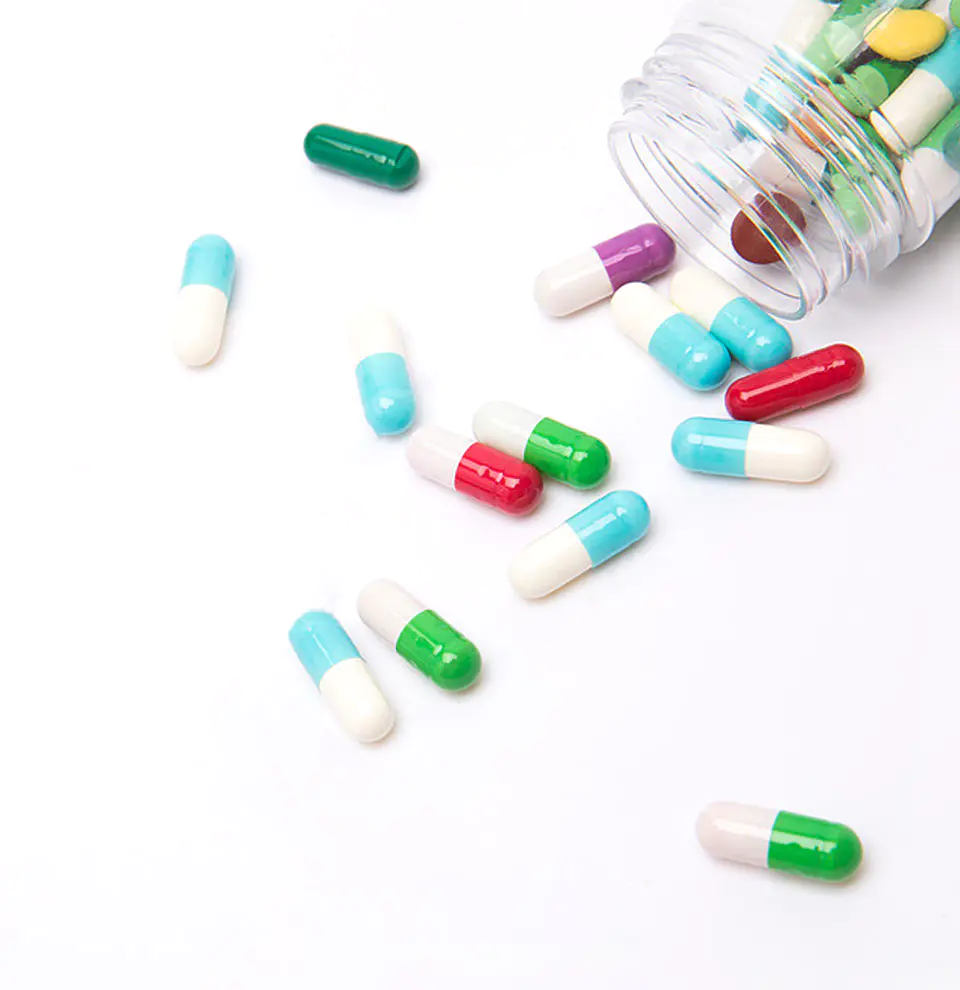
Capsule color is not merely aesthetic. Research in pharmaceutical psychology has consistently shown that the color of a capsule influences patient expectations and, in some cases, the perceived and even measured efficacy of the drug. A 1970 study by Blackwell and colleagues found that patients expected — and reported — different effects from differently colored placebo capsules. Yellow capsules were associated with antidepressant effects; red and orange with stimulant effects; blue with sedation.
Color is also a critical safety feature. Distinctive color combinations help patients identify their medications, reducing the risk of medication errors — particularly important in older adults who may be managing 5 to 10 medications simultaneously. Regulatory guidelines in many countries require that oral dosage forms maintain consistent appearance throughout a product's approved lifetime for this reason.
Capsule colors are produced using approved colorants — iron oxides for red, yellow, and black shades; titanium dioxide for white; FD&C dyes for blue and green. HPMC capsule shells accept colorants equally well as gelatin, making color flexibility a non-issue in the transition between shell materials.
Capsule technology is not static. Several advances are reshaping how capsules work and what they can deliver.
Colonic delivery — releasing drug specifically in the large intestine — is increasingly important for treatments targeting gut microbiome conditions. New capsule systems use pH-sensitive HPMC derivatives that only dissolve above pH 7.0, which corresponds roughly to the conditions in the distal small intestine and colon. This allows probiotics, fecal microbiota transplant preparations, and locally acting medications to reach the colon without being degraded upstream.
Ingestible electronics — capsules containing sensors, cameras, or drug-release mechanisms triggered remotely or by physiological signals — represent the frontier of capsule technology. The PillCam (given Imaging) is already widely used for non-invasive visualization of the small intestine. Experimental capsules with onboard pH sensors and wireless transmitters can confirm in real time that a medication has been swallowed and reached the stomach — directly addressing adherence monitoring in clinical trials and disease management.
Some capsule formulations are designed to adhere to the mucous membrane lining of the gastrointestinal tract, extending the contact time between the drug and the absorption surface. Mucoadhesive polymers like carbomer, chitosan, and certain HPMC grades can increase residence time at specific sites by several hours, improving the absorption of drugs with a narrow absorption window.
3D printing is beginning to enter pharmaceutical manufacturing, enabling capsule-like dosage forms with precisely tailored geometries, release rates, and dose combinations. The first FDA-approved 3D-printed drug (Spritam, for epilepsy) was a tablet, but 3D-printed capsule equivalents with multiple drug compartments and customized release profiles are in active development. This technology holds particular promise for pediatric and geriatric patients who require individualized dosing difficult to achieve with mass-produced products.
Your email address will not be published. Required fields are marked *
If you would like to learn more about our products, please feel free to contact us and we will do our to assist you.
Copyright © Shaoxing Zhongya Capsule Co., Ltd. High Quality Empty Capsule Manufacturers Wholesale Transparent Empty Capsule Factory
All Rights Reserved.

