
 English
 中文简体
中文简体 русский
Product Consultation
Your email address will not be published. Required fields are marked *


Content
Under normal stomach conditions, a standard gelatin capsule dissolves within 15 to 30 minutes after ingestion. This rapid breakdown is one of the primary reasons gelatin-based capsules remain the most widely used delivery system in the pharmaceutical and supplement industries. The shell softens almost immediately upon contact with gastric fluid, allowing the active ingredients inside to be released and absorbed by the body relatively quickly.
That said, "15 to 30 minutes" is not a fixed rule. The actual dissolution time for a gelatin capsule depends on several variables, including the type of gelatin used, the stomach's pH level at the time of ingestion, whether the capsule is taken with water, and the individual's digestive health. In some conditions, dissolution can take as little as 5 minutes or extend beyond 45 minutes. Understanding these variables helps patients, formulators, and supplement users make better decisions about their dosing.

A gelatin capsule shell is made primarily from hydrolyzed collagen derived from animal sources — most commonly bovine (cattle) hides or porcine (pig) skin and bones. This protein-based material is uniquely suited for oral drug delivery because it is both biocompatible and highly soluble in warm aqueous environments like stomach acid.
The gelatin used in capsule manufacturing typically has a bloom strength (a measure of gel firmness) ranging from 150 to 280 grams. Higher bloom strength means a firmer shell, which can slightly extend the dissolution window. Plasticizers such as glycerin or sorbitol are added to the gelatin formulation to give the shell flexibility so it doesn't crack during storage or handling. These plasticizers can marginally slow dissolution compared to a pure gelatin film, but the effect is generally negligible under normal stomach conditions.
There are two common formats for gelatin capsules:
This distinction is important. If you are comparing dissolution times between different capsule products, always check whether you are dealing with a hard or soft gelatin capsule, as the performance profile is not identical.
Dissolution is not purely a function of the capsule's physical properties. Several environmental and physiological factors interact to determine how quickly the shell breaks down in practice.
Gelatin dissolves most efficiently in acidic environments. The human stomach typically maintains a pH of 1.5 to 3.5 when fasted, which is ideal for rapid gelatin breakdown. If the stomach pH is elevated — for example, in people taking proton pump inhibitors (PPIs), antacids, or those with atrophic gastritis — dissolution time increases noticeably. Studies have shown that at a pH of 6.8 (comparable to intestinal fluid), gelatin capsules may take significantly longer to break down, or may pass partially intact into the small intestine.
Water is essential for gelatin hydration. Taking a gelatin capsule with at least 240 mL (8 oz) of water significantly improves dissolution speed because it ensures the shell is immediately surrounded by fluid. Swallowing a capsule with minimal liquid — or without water at all — risks the capsule sticking to the esophagus or sitting dry in the stomach for several extra minutes before fluid contact is made.
Taking a gelatin capsule on an empty stomach generally leads to faster dissolution because the capsule quickly contacts concentrated gastric acid without being diluted by food. However, for supplements or medications that cause gastric irritation, manufacturers often recommend taking them with food. In a fed state, gastric emptying slows and the acidic environment is temporarily buffered, which can extend dissolution time by 10 to 20 minutes in some cases.
Gelatin's solubility is temperature-dependent. At body temperature (approximately 37°C / 98.6°F), gelatin readily dissolves. In vitro dissolution tests conducted at lower temperatures consistently show slower breakdown rates. For practical purposes, this is rarely a clinical issue in healthy individuals but can be a consideration in patients with hypothermia or severely reduced core temperatures.
Gelatin capsules come in standardized sizes, from size 000 (the largest, approximately 1.37 mL fill volume) down to size 5 (the smallest, approximately 0.13 mL fill volume). Larger capsules have more gelatin in their shell and therefore take marginally longer to fully dissolve. However, since dissolution is driven by surface area and fluid penetration, the difference between capsule sizes is typically only a few minutes.
One of the less-discussed but important factors is the phenomenon of gelatin crosslinking. When gelatin capsules are exposed to high humidity, elevated temperature, or reactive aldehydes (such as those released by certain excipients like lactose under heat stress), the gelatin proteins form cross-links. These cross-links significantly harden the shell and can dramatically slow dissolution — sometimes causing the capsule to pass through the GI tract largely intact. This is why pharmaceutical manufacturers use controlled storage conditions and specify shelf-life limits based on dissolution testing.
The table below summarizes typical dissolution timeframes for gelatin capsules under different conditions, based on in vitro and in vivo data commonly referenced in pharmaceutical research:
| Condition | Capsule Type | Estimated Dissolution Time |
|---|---|---|
| Fasted stomach, low pH (1.5–2.5), adequate water | Hard gelatin capsule | 5–15 minutes |
| Standard conditions (typical healthy adult) | Hard gelatin capsule | 15–30 minutes |
| Standard conditions (typical healthy adult) | Soft gelatin capsule (softgel) | 20–45 minutes |
| Fed stomach, buffered pH | Hard gelatin capsule | 25–45 minutes |
| Elevated pH (PPI use, antacids), reduced acid | Hard or soft gelatin capsule | 45–90+ minutes |
| Crosslinked shell (improper storage) | Hard or soft gelatin capsule | Unpredictable / may not fully dissolve |
Gelatin is not the only material used to make capsules. Understanding how it compares to alternatives helps clarify why gelatin remains dominant despite other options being available.
Hydroxypropyl methylcellulose (HPMC) capsules are the most widely used plant-based alternative. HPMC capsules are suitable for vegetarians, vegans, and those with religious dietary restrictions. However, their dissolution behavior is meaningfully different. HPMC capsules depend on moisture absorption to swell and open, and at low humidity or reduced gastric fluid, they can take 30 to 60 minutes or longer to disintegrate. In contrast, gelatin capsules dissolve more predictably across a broader range of conditions. For moisture-sensitive active ingredients, HPMC capsules have an advantage since they absorb less environmental moisture than gelatin, but this same property slows their dissolution in vivo.
Pullulan capsules, derived from tapioca starch fermentation, are another plant-based option. They dissolve at a rate comparable to HPMC and are often used for high-end supplement branding due to their clean, natural origin. Dissolution times are generally similar to HPMC — slightly slower than gelatin under standard gastric conditions.
Enteric-coated capsules — whether gelatin-based or HPMC-based — are specifically engineered not to dissolve in the stomach. They are coated with materials like cellulose acetate phthalate or methacrylic acid copolymers that remain stable at low pH but dissolve at pH values above 5.5 to 6, which corresponds to the environment of the small intestine. This means an enteric-coated gelatin capsule will pass through the stomach intact and dissolve only after reaching the duodenum, typically 1 to 3 hours after ingestion depending on gastric emptying rate.
Not necessarily. Capsule dissolution and drug or nutrient absorption are two distinct — though related — processes. Dissolution refers to the breakdown of the gelatin shell, which releases the contents into the gastrointestinal fluid. Absorption refers to the movement of the active ingredient across the intestinal mucosa into the bloodstream. A rapidly dissolving gelatin capsule is only beneficial if the active ingredient it contains is also readily soluble and permeable.
For example, a gelatin capsule containing a highly water-soluble vitamin like vitamin C will release and absorb quickly once the shell dissolves. In contrast, a gelatin capsule containing a fat-soluble compound like CoQ10 or vitamin K2 still requires bile salts and lipid micelles for absorption, regardless of how quickly the shell opens. In these cases, the dissolution speed of the gelatin capsule has minimal influence on overall bioavailability — formulation factors such as the presence of fats or emulsifiers in the fill material matter much more.
This is why softgel capsules — which typically dissolve slightly slower than hard gelatin capsules — are often preferred for fat-soluble ingredients. The oily fill in a softgel creates a ready-made lipid environment that supports absorption, compensating for any additional dissolution time.
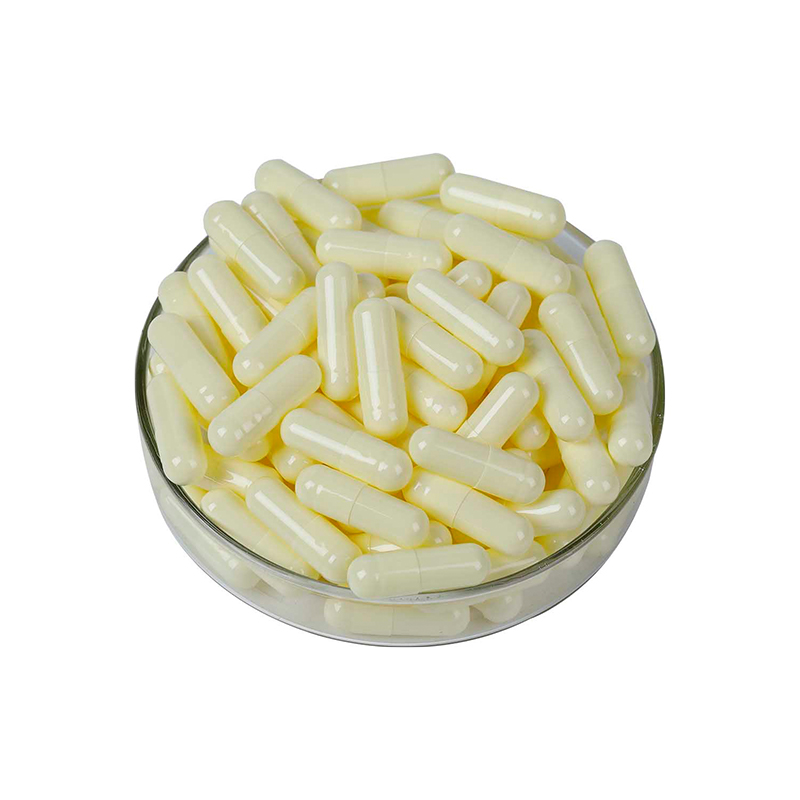
Pharmaceutical-grade gelatin capsules used in drug products must meet dissolution specifications defined by pharmacopoeial standards such as the United States Pharmacopeia (USP) and the European Pharmacopoeia (Ph. Eur.). These standards use standardized apparatus (typically USP Apparatus 1 or 2) and dissolution media at 37°C to measure how much of the active ingredient is released over a defined time period.
For immediate-release products, the USP generally requires that at least 80% of the active ingredient is released within 30 minutes (the Q value). This does not mean the gelatin capsule itself must fully dissolve in 30 minutes, but the shell's dissolution must be fast enough to allow this level of active ingredient release. In practice, the gelatin shell's rapid dissolution — typically within 15 minutes under test conditions — is what makes meeting this 30-minute release standard feasible.
Dietary supplement manufacturers are not required to meet USP dissolution standards, though many voluntarily adopt them or third-party verification programs such as USP Verified, NSF International, or ConsumerLab to demonstrate product quality. If dissolution is a concern for you when evaluating a supplement, checking for these certifications is a practical first step.
For most people taking gelatin capsule supplements or medications, dissolving is not something that requires active management. However, certain practices reliably support optimal dissolution and absorption.
For the vast majority of healthy individuals, gelatin capsule dissolution is a non-issue — the process happens automatically within an acceptable timeframe. However, there are specific clinical scenarios where slow or incomplete dissolution of gelatin capsules becomes medically relevant.
Achlorhydria (absence of stomach acid) and hypochlorhydria (reduced stomach acid) are conditions that significantly impair gelatin capsule dissolution. These conditions are more common than many people realize — studies suggest that up to 30% of adults over 60 have some degree of hypochlorhydria due to age-related changes in gastric mucosa. For these patients, gelatin capsules may fail to properly dissolve in the stomach, resulting in reduced bioavailability of active ingredients or the capsule passing largely intact into the small intestine.
Gastroparesis is a condition in which the stomach empties abnormally slowly. Even if a gelatin capsule dissolves, the dissolved contents may remain in the stomach for extended periods before reaching the small intestine for absorption. This unpredictability can affect the pharmacokinetics of time-sensitive medications.
Children and elderly patients often have different gastric physiology compared to healthy adults. Neonates and infants have higher gastric pH, which may slow gelatin capsule dissolution significantly. Elderly patients frequently take multiple medications simultaneously, including acid-suppressants, and may have reduced gastric fluid secretion — all of which compound to create less predictable capsule dissolution behavior.

A common question from curious users is: how long does a gelatin capsule take to dissolve in a glass of water? This is a reasonable proxy test for understanding shell behavior, though it does not fully replicate in vivo conditions.
In plain room-temperature water (approximately 20–25°C), a hard gelatin capsule will begin to swell and soften within 2 to 5 minutes, and will fully rupture or dissolve within 10 to 20 minutes. In warm water (37–40°C), this process is faster — softening begins within 1 to 2 minutes, with full dissolution within 5 to 10 minutes. In cold water (below 15°C), dissolution is noticeably slower and may take 30 minutes or longer.
Softgels behave differently in water — they swell and become very soft but do not readily rupture as cleanly as hard gelatin capsules. Full dissolution of a softgel in plain water at room temperature can take 30 to 60 minutes or more. In the stomach, pepsin and gastric acid accelerate this breakdown considerably.
These in vitro tests are useful for rough quality checks but should not be used as the sole measure of a product's in vivo performance, since they lack the enzymatic activity, peristaltic agitation, and pH conditions present in a real gastrointestinal tract.
Gelatin capsules are engineered for reliable, rapid dissolution in the human GI tract. Under typical conditions, they dissolve within 15 to 30 minutes in the stomach — faster than most alternative capsule materials. The key variables that influence this timeline are gastric pH, fluid volume, fed versus fasted state, capsule format (hard vs. soft), and storage conditions.
For most healthy adults taking supplements or medications, gelatin capsule dissolution is not something that needs to be actively managed. For individuals with specific health conditions — particularly those affecting gastric acid production or stomach motility — it is worth discussing capsule-based dosing with a healthcare provider to ensure the chosen delivery format is appropriate.
Choosing a quality gelatin capsule product, storing it correctly, and following simple best practices like drinking sufficient water go a long way toward ensuring that every dose performs as intended.
Your email address will not be published. Required fields are marked *
If you would like to learn more about our products, please feel free to contact us and we will do our to assist you.
Copyright © Shaoxing Zhongya Capsule Co., Ltd. High Quality Empty Capsule Manufacturers Wholesale Transparent Empty Capsule Factory
All Rights Reserved.

