
 English
 中文简体
 русский
Product Consultation
Your email address will not be published. Required fields are marked *

Content
Turn a supplement bottle around and the second line of the Supplement Facts panel often reads something like this: "Other Ingredients: hypromellose, rice flour, silicon dioxide." No calories, no vitamins, no minerals, just three names most shoppers skim past. Hypromellose is the one worth understanding, because in most bottles it is the capsule itself.
Here is the direct answer. In a supplement, hypromellose (written on some labels as hydroxypropyl methylcellulose, or HPMC) is a plant-derived cellulose polymer used to make vegetarian capsule shells. It holds the powder or oil in place, limits moisture and oxygen exposure, and dissolves in the digestive tract so the fill can be released. On a tablet label, the same ingredient may instead work as a binder, a film coating, or the matrix that slows release. It supplies no protein, no vitamins, and no animal material.
If a bottle says "vegetarian capsule," "veggie cap," or "Vcap," the shell material is very likely hypromellose, although pullulan and modified starch shells also carry those claims. The useful details sit behind that sentence, and they are where purchasing and formulation decisions actually get made: how the polymer behaves, why its grades differ, what a supplier should be able to prove, and where it still loses to gelatin on cost and dissolution speed.
Hypromellose starts as cellulose, the same structural polymer found in wood and cotton. Manufacturers take purified cellulose from softwood pulp or cotton linters and react it with propylene oxide and methyl chloride. The reaction attaches two groups along the cellulose chain: methoxyl groups and hydroxypropyl groups. The proportion of each group defines the substitution type printed in pharmacopoeias, such as hypromellose 2208 or hypromellose 2910, where the numbers reflect the percentage of methoxyl and hydroxypropyl content.
That chemistry produces a polymer with an unusual habit. It dissolves readily in cold water but gels when heated. Capsule production leans on exactly that behavior: steel pins are dipped into a hypromellose solution, the film sets as it warms, and the two shell halves hold their shape once dried. The same film-forming property is why the polymer also appears in tablet coatings and slow-release matrices.
In the body, hypromellose is largely not digested. It passes through the gut mostly intact and is excreted, which is why regulators treat it as a low-risk excipient. The Joint FAO/WHO Expert Committee on Food Additives (JECFA) evaluated it and set an acceptable daily intake of "not specified," and in the European Union it carries the food additive number E464. A size 0 capsule shell weighs roughly 96 to 105 milligrams, so the amount delivered per dose is small compared with a normal serving of a fiber-containing food.
| Position on the label | What it is doing | Typical grade family |
|---|---|---|
| Capsule shell, listed first under other ingredients | Forms the two shell halves that carry the dose | Shell grade, medium viscosity |
| Tablet binder or matrix former | Holds granules together or meters release over hours | High viscosity, type 2208 |
| Film coating or glaze | Masks taste, adds gloss, protects the core | Low viscosity, type 2910 |
| Liquid, gummy, or powder blend | Thickens and keeps solids suspended | Low to medium viscosity |
The short version: a vegetarian claim sells, and hypromellose is the most dependable way to print one without rebuilding the rest of the formula. The longer version involves moisture, shipping conditions, and a chemical quirk in gelatin that formulators learn to respect.
Gelatin shells hold roughly 12 to 16 percent moisture by weight, while hypromellose shells generally sit between 3 and 6 percent. That gap matters when the fill is moisture sensitive. Probiotic blends, vitamin C, several B vitamins, and many botanical extracts pull water out of a wet shell over time, which softens the capsule, shortens shelf life, and accelerates potency loss. A drier shell leaves less water available to migrate into the fill.
Gelatin also contains reactive sites that can cross-link when it meets aldehydes or reducing sugars released by certain fill ingredients. Cross-linking builds a tough skin on the shell that slows or blocks dissolution, sometimes badly enough that a batch fails release testing. Hypromellose does not carry the same reactive chemistry, so this failure mode is largely removed from the risk list.
| Property | Hypromellose shell | Gelatin shell |
|---|---|---|
| Raw material origin | Plant cellulose | Animal collagen |
| Shell moisture | About 3 to 6 percent | About 12 to 16 percent |
| Vegetarian and vegan claims | Supported | Not supported |
| Cross-linking risk | Low | Well documented |
| Humidity and heat tolerance | Higher | Lower |
| Relative shell cost | Higher | Lower |
None of this makes hypromellose the automatic winner. Shell cost per thousand units is still higher than gelatin, and it moves with grade and order volume. Hypromellose shells also hydrate more slowly in the low-pH environment of the stomach, so most manufacturers include a small amount of a gelling aid and then validate dissolution on the finished product instead of assuming it. In low-humidity filling rooms, hypromellose shells turn brittle faster than gelatin, so equipment areas generally run around 45 to 60 percent relative humidity at roughly 20 to 25 degrees Celsius.
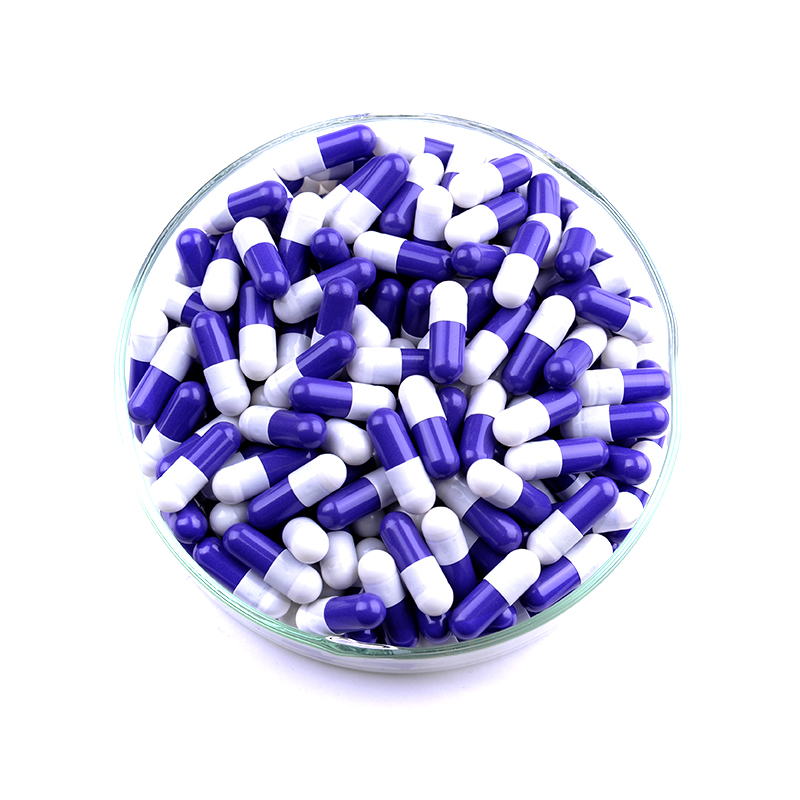
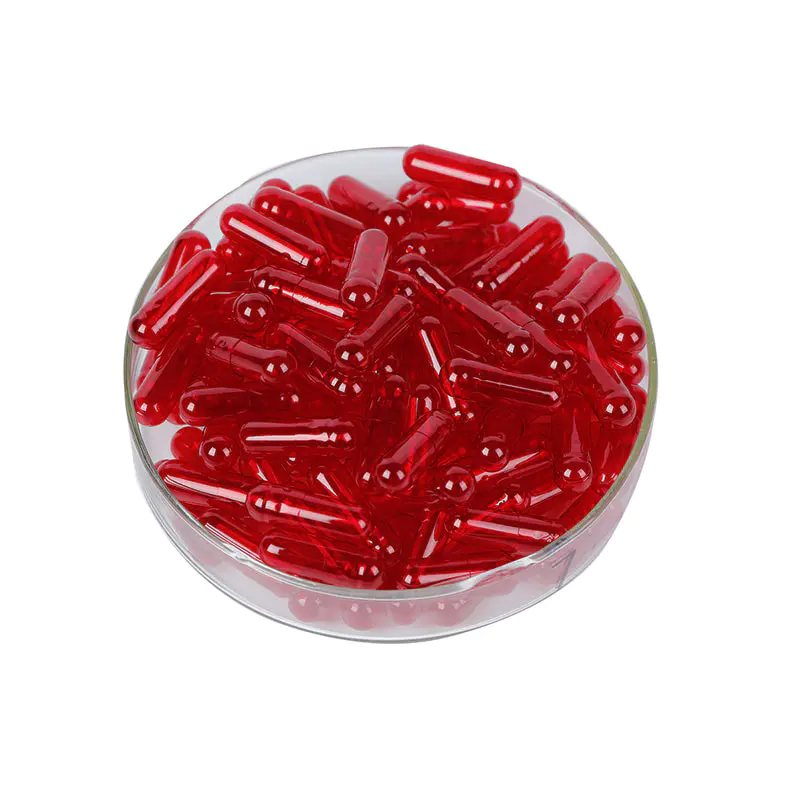
 HPMC capsuleMain Ingredient: HPMCView Product →
For brands building a vegetarian or vegan line, the practical starting point is a plant shell that matches the fill's moisture profile and the machine's running conditions, which is exactly the conversation a capsule supplier should be able to have on the first call.
Pharmacopoeias recognize several substitution types, and the number tells you how the polymer will behave. Hypromellose 2910, often sold as the E type, is the workhorse for film coating and binding. Hypromellose 2208, the K type, carries more hydroxypropyl groups and is favored when a formulator wants to build a sustained-release matrix. Hypromellose 2906 and 1828 round out the common set.
Viscosity is the second half of the grade name. The same substitution type is sold at 3, 6, 15, 50, 100, 4000 and 100000 mPa.s, among others, measured in a 2 percent aqueous solution at 20 degrees Celsius. A low-viscosity grade flows into a thin, glossy coating. A high-viscosity grade builds a gel layer that meters release across several hours.
This is where label reading hits a wall. "Hypromellose" on a tablet's ingredient list says nothing about type or viscosity, yet those two variables control how fast the dose comes out. For a modified-release product, the supplier's certificate of analysis has to state the grade explicitly, and switching to an apparently equivalent grade from another source can shift the release profile enough to require fresh dissolution work.
The same polymer reaches shoppers and buyers under several names. These are the versions worth recognizing on a supplement panel.
Several similar-sounding names describe entirely different materials, and mixing them up leads to wrong assumptions about release behavior.
Other plant shells exist as well. Pullulan, a polysaccharide produced by fermentation, gives clear and glossy capsules and suits brands that want a starch-free position. Modified starch shells are also available and can land at a lower price point, though they tend to be more sensitive to humidity during storage.
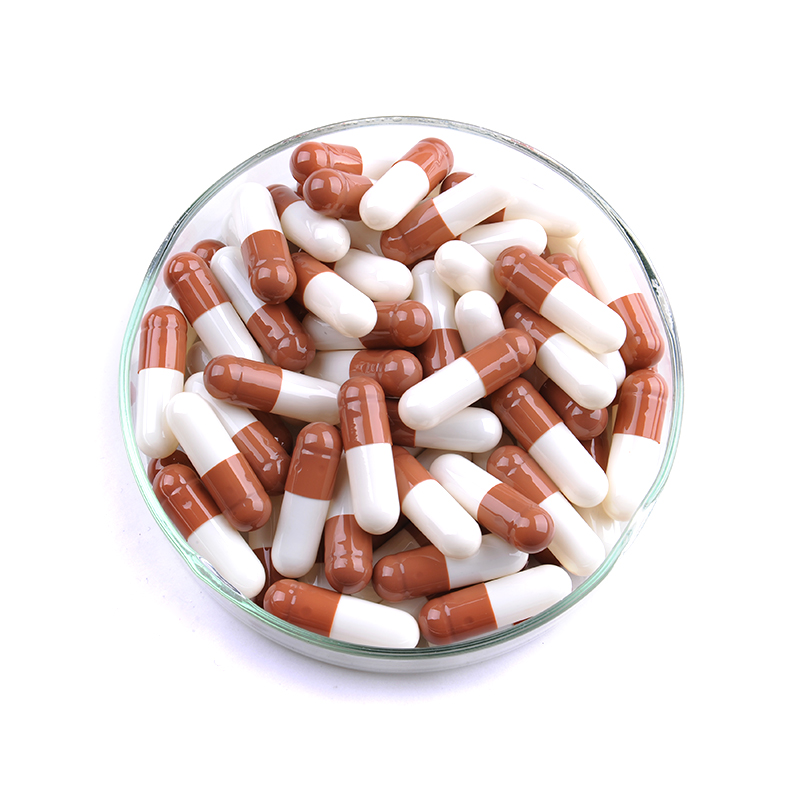
 Gelatin capsuleMain Ingredients: Gelatin (usually derived from animal bones and skins such as cattle and pigs)View Product →
The material hypromellose most often replaces is gelatin, and that shell still makes sense for many pharmaceutical and nutraceutical products where cost per unit and rapid gastric opening carry more weight than a vegetarian claim.
Most quality problems with plant capsules are caught long before a bottle reaches a consumer, provided the specification covers the right numbers. These are the items that belong in a purchase review.
| Capsule size | Approximate volume | Typical fill weight at 0.8 g/mL |
|---|---|---|
| 00 | 0.95 mL | About 760 mg |
| 0 | 0.68 mL | About 545 mg |
| 1 | 0.50 mL | About 400 mg |
| 2 | 0.37 mL | About 295 mg |
| 3 | 0.30 mL | About 240 mg |
| 4 | 0.21 mL | About 170 mg |
Suppliers publish the wall dimensions and the advantages and models of hypromellose hollow capsules for exactly this reason. Comparing those numbers against your filling line before ordering avoids the most expensive mistake in capsule purchasing, which is discovering a dimensional mismatch after the powder blend has already been made.
A specification only helps if someone tests against it. Viscosity, moisture content, ash, heavy metal content, and microbial limits are the routine checks on hypromellose raw material, and each one catches a different failure. Moisture above specification makes shells soft and sticky at the filling station. Viscosity outside the declared range changes film strength and can shift dissolution. Heavy metal and microbial limits protect the finished product from problems that no later process step can remove.
A supplier that runs those checks internally, in its own advanced capsule chemistry laboratory, can hold the data against a specific batch record instead of relying on periodic outside sampling. That is the practical difference between a document and a verified result, and it is the first thing an experienced quality reviewer asks about.
At the amounts found in capsule shells, yes. JECFA reviewed the material and set an acceptable daily intake of "not specified," which is the category used for substances of very low toxicity. A single size 0 shell contributes roughly 100 milligrams, so even a multi-capsule daily routine delivers far less than the quantities used as a thickener in ordinary food products. As with any fiber-type polymer, people with unusual sensitivity may notice mild digestive changes, but this is uncommon at capsule-level intake.
No. Gelatin is a protein extracted from animal collagen, usually from bovine or porcine sources. Hypromellose is a chemically modified plant cellulose with no animal content, which is why it supports vegetarian, vegan, and many religious dietary positions that gelatin cannot.
Yes, but it hydrates rather than melting away instantly. The shell absorbs water, swells, and opens within the timeframe set by the pharmacopoeia, then the fill disperses normally. Because the shell is slightly slower to hydrate in acidic conditions than a gelatin shell, manufacturers usually add a small amount of a gelling aid and confirm disintegration and dissolution on the finished dose.
They are the same substance. Hypromellose is the shortened official name used in pharmacopoeias, while hydroxypropyl methylcellulose is the full chemical description. HPMC is the abbreviation you will see in supplier documents and technical literature.
Certain non-aqueous liquids, oils, and oil-based suspensions work well in plant shells. The deciding factor is whether the fill plasticizes or softens the shell wall. Oily vitamin blends and omega-3 concentrates are common candidates, but a compatibility trial is standard practice before a commercial run.
It is a non-digestible soluble polymer, and it is used as a fiber source in some food applications. In a supplement, however, the shell contributes only about 100 milligrams per capsule, which is a rounding error next to the 25 to 30 grams of fiber recommended in a daily diet. Do not count a capsule shell as meaningful fiber intake.
The lower shell moisture is genuinely useful here. Probiotic blends are sensitive to water activity, and a drier shell reduces water migration during storage. Many brands also pair plant shells with desiccant packaging and controlled warehouse conditions to protect viable counts through the shelf life.
For an immediate-release powder filling, the difference is small once the shell opens. For a modified-release tablet that lists hypromellose as a matrix former, the grade and viscosity control the release rate entirely, and changing them can change absorption. That is why the grade has to be named on the specification, not just the material.
Hypromellose rarely gets credit on a supplement label, yet it does three jobs at once: it supports a vegetarian claim, it protects moisture-sensitive fills, and it removes a well-known dissolution risk that has troubled gelatin shells for decades. The trade-offs are real, including a higher shell cost and slower hydration in stomach acid, and both are manageable with the right grade and validation data.
If you are buying or specifying plant capsules, four questions settle most of the risk. What is the declared substitution type and viscosity grade? What is the shell moisture specification and test method? Where is the disintegration and dissolution evidence on the finished dose? And does the supplier test all of it internally against a batch record? Get those four answers in writing and the word "hypromellose" on your label stops being a mystery and starts being a quality decision you can defend.
Your email address will not be published. Required fields are marked *
If you would like to learn more about our products, please feel free to contact us and we will do our to assist you.
Copyright © Shaoxing Zhongya Capsule Co., Ltd. High Quality Empty Capsule Manufacturers Wholesale Transparent Empty Capsule Factory
All Rights Reserved.

