
 English
 中文简体
中文简体 русский
Product Consultation
Your email address will not be published. Required fields are marked *

Content
A suspension is a liquid dosage form in which solid drug particles are dispersed, rather than dissolved, throughout a liquid vehicle. Because the active ingredient stays as discrete particles instead of forming a true solution, a suspension always needs to be shaken before use so the medicine redistributes evenly through the liquid. This single property separates suspensions from syrups, solutions, and elixirs, and it explains almost every formulation rule that follows: particle size control, viscosity adjustment, flocculation behavior, and the now-familiar instruction printed on the label, "shake well before use."
Suspensions exist because not every active ingredient is soluble enough, stable enough, or palatable enough to be delivered as a clear solution. Many antibiotics, antacids, and pediatric formulations rely on suspension technology specifically because the drug would degrade, taste unpleasant, or simply refuse to dissolve at the concentration a clinical dose requires. Formulators choose a suspension when solubility is the obstacle, not an afterthought.
Every pharmaceutical or nutraceutical suspension is built from four functional layers working together. Removing any one of them either causes the particles to cake at the bottom of the bottle or makes the product unstable on the shelf.
The insoluble drug particles themselves, typically milled to a defined particle size range, often between 1 and 50 microns, so they neither settle too fast nor clog a dosing syringe.
The liquid vehicle, usually purified water, sometimes combined with glycerin or propylene glycol to adjust viscosity and slow sedimentation.
A thickener such as xanthan gum, microcrystalline cellulose, or carboxymethylcellulose that raises viscosity enough to keep particles afloat longer without making the liquid too thick to pour.
Surfactants that coat hydrophobic particles so the liquid vehicle can actually surround them, preventing clumping and supporting even redispersion on shaking.
These three liquid dosage forms get confused constantly, but the difference is structural, not cosmetic. A solution has the drug fully dissolved at a molecular level, so it never separates and never needs shaking. An emulsion disperses one liquid inside another immiscible liquid, like oil droplets suspended in water, stabilized by an emulsifier. A suspension disperses solid particles inside a liquid, and because solids are heavier and less mobile than droplets, sedimentation is the defining challenge unique to this category.
| Property | Solution | Suspension | Emulsion |
|---|---|---|---|
| Drug state | Fully dissolved | Solid particles dispersed | Liquid droplets dispersed |
| Appearance | Clear | Cloudy, opaque | Milky, opaque |
| Shake before use | Not required | Always required | Usually required |
| Typical use case | Syrups, IV fluids | Antacids, antibiotics | Topical lotions, creams |
| Main stability risk | Chemical degradation | Sedimentation, caking | Phase separation, creaming |

Not all suspensions serve the same purpose. Formulators classify them by route of administration and by how the particles behave once dispersed, and each category carries its own manufacturing demands.
Commercial suspension manufacturing follows a fairly consistent sequence across the industry, whether the product is an antacid, a cough syrup, or a veterinary dewormer.
Sedimentation in a suspension follows Stokes' Law, which states that settling velocity rises with particle size and the density difference between particle and vehicle, and falls as the vehicle's viscosity increases. This single relationship is the reason almost every stabilization technique in suspension formulation exists.
Halving particle diameter cuts settling velocity to roughly a quarter, since settling rate scales with the square of particle radius.
Adding suspending agents like xanthan gum thickens the continuous phase, directly slowing the rate particles fall through it.
Narrowing the density gap between solid and liquid reduces the driving force behind sedimentation in the first place.
Loosely bound flocs settle as light, fluffy clusters rather than a hard cake, so a gentle shake fully redisperses the dose.
A well-formulated suspension is judged less by whether it settles at all, since virtually all suspensions eventually do, and more by how easily that sediment redistributes with minimal shaking. A formulation that requires vigorous shaking for over thirty seconds to achieve uniform dosing is generally considered to have a redispersibility problem worth re-engineering.
Because the active ingredient is not evenly dissolved, dosing accuracy in a suspension depends entirely on uniform particle distribution at the moment of measuring. Studies on pediatric oral suspensions have repeatedly shown that inadequate shaking, or measuring from a settled bottle, can cause significant under-dosing from the first few doses poured and over-dosing toward the bottle's end, since particles that have settled and recompacted near the bottom carry a disproportionate share of the active ingredient.
This is precisely why suspension labeling instructs patients to shake the bottle for a specified duration, often 10 to 20 seconds, and why oral dosing syringes are now strongly preferred over household spoons, which vary in volume by as much as 20 percent depending on the spoon used.

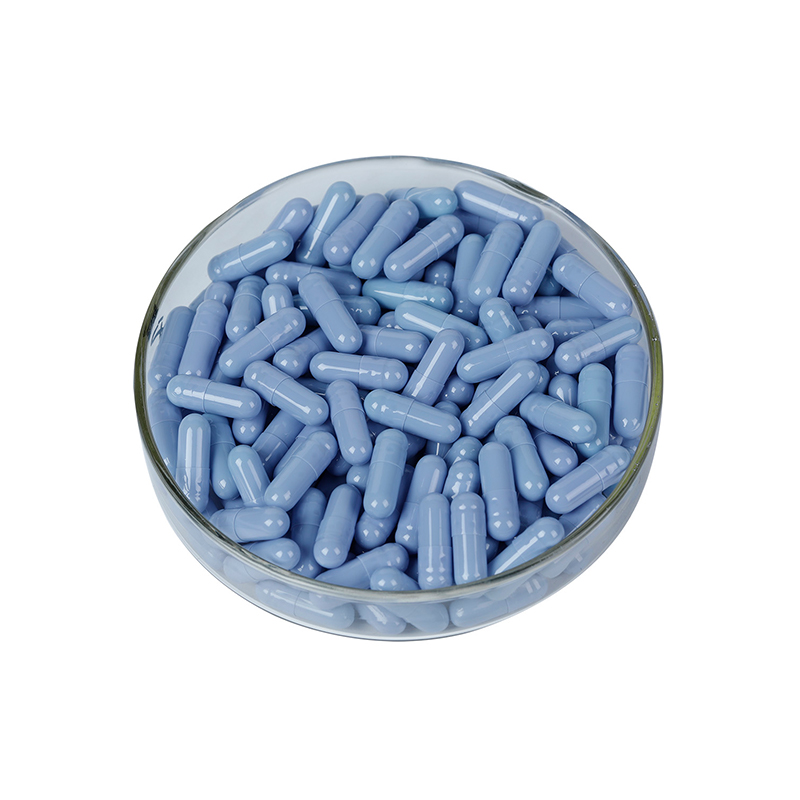
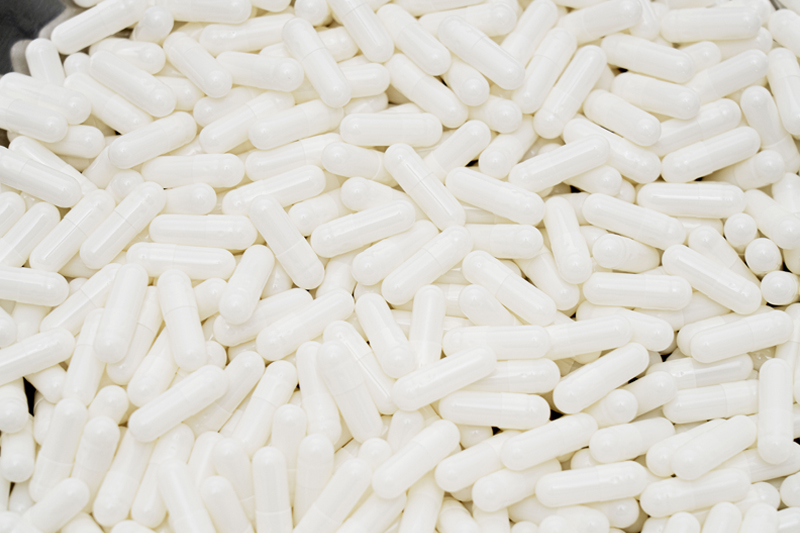
Suspensions and capsules solve overlapping problems in drug delivery, and the two technologies frequently intersect during formulation development. A natural empty capsule, typically made from gelatin or plant-derived hydroxypropyl methylcellulose, is the shell into which a manufacturer fills a measured dose of powder, granules, or even a thickened semi-solid suspension matrix. When an active ingredient is poorly soluble or has an unpleasant taste, exactly the situations that often push a formulator toward a liquid suspension in the first place, filling that same ingredient into a natural empty capsule offers an alternative route that avoids the liquid phase altogether.
The choice between a suspension and a capsule-based product usually comes down to the patient population and the practical dosing need. Liquid suspensions remain the standard for infants, young children, and patients who cannot swallow solids, while natural empty capsules are favored when a manufacturer wants a shelf-stable, easily transportable unit dose without the preservative load that a liquid formulation requires to prevent microbial growth once opened.
Because the active ingredient exists as solid particles that settle to the bottom of the bottle over time. Shaking redistributes those particles evenly through the liquid so that every dose poured contains the correct, consistent amount of active ingredient.
Doses taken from an unshaken or poorly shaken bottle can be significantly under-dosed or over-dosed, since the concentration of active particles varies by depth in a settled suspension, with the highest concentration typically near the bottom.
No. A syrup is a solution where the drug and sugar are fully dissolved and the liquid stays clear, while a suspension is cloudy because the drug remains as undissolved particles dispersed through the liquid.
Many drugs used in pediatrics are poorly soluble or taste bitter when dissolved, so suspending the particles in a flavored liquid vehicle allows accurate, swallowable dosing without requiring the child to take a tablet or capsule.
In some cases, yes. A poorly soluble active ingredient can be filled into a natural empty capsule as a powder, granule, or thickened paste rather than dispersed in a liquid, which is one reason capsule and suspension formulation teams often share overlapping development work.
This varies by product and preservative system, but most reconstituted oral suspensions, such as antibiotic suspensions mixed from powder at the pharmacy, are stable for roughly 10 to 14 days at refrigerated or room temperature, depending on the specific formulation's stability data.
Cloudiness comes from light scattering off the dispersed solid particles. A true solution has no particles large enough to scatter visible light, so it remains optically clear regardless of how concentrated it is.
Your email address will not be published. Required fields are marked *
If you would like to learn more about our products, please feel free to contact us and we will do our to assist you.
Copyright © Shaoxing Zhongya Capsule Co., Ltd. High Quality Empty Capsule Manufacturers Wholesale Transparent Empty Capsule Factory
All Rights Reserved.

