 English
 中文简体
中文简体 русский
Product Consultation
Your email address will not be published. Required fields are marked *

Content
An orally disintegrating tablet (ODT) is a solid oral dosage form designed to disintegrate or dissolve on the tongue within seconds after contact with saliva, without drinking water and without chewing. The patient places the tablet on the tongue, the tablet absorbs saliva, breaks apart into fine particles, and the resulting suspension is swallowed naturally.
The U.S. Food and Drug Administration describes an ODT as a solid dosage form containing a medicinal substance that disintegrates rapidly, usually within seconds, when placed on the tongue. The European Pharmacopoeia uses the term "orodispersible tablet" and sets an acceptance limit of no more than 3 minutes for disintegration. Most commercial ODT products, however, target a disintegration time of 30 seconds or less because a faster mouthfeel directly improves patient acceptance.
ODTs exist because a large number of patients cannot comfortably swallow conventional pills. Research published in the European Journal of Clinical Pharmacology found that 30% of adults have difficulty swallowing tablets, and roughly 10% of them stop taking their medication because of that difficulty. The ODT format removes this barrier entirely, which makes it one of the most patient-centric innovations in oral solid dosage design of the past two decades.
| Parameter | Typical ODT specification |
|---|---|
| Disintegration site | On the tongue, inside the oral cavity |
| Disintegration time | 30 seconds or less is the industry target; up to 3 minutes per European Pharmacopoeia |
| Water needed | None |
| Chewing needed | No |
| Main absorption route | Pre-gastric absorption through the oral mucosa, followed by gastric absorption after swallowing saliva |
| Packaging | Moisture-protective unit-dose blister packs |
The clearest way to understand an ODT is to compare it with the other oral solid dosage forms patients encounter every day. A conventional tablet must be swallowed whole with a glass of water, then disintegrates in the stomach over 5 to 30 minutes. A chewable tablet requires deliberate chewing to break the mass down. A hard capsule must also be swallowed, usually with water, and its shell dissolves in the stomach over roughly 10 to 20 minutes.
An ODT sits in its own category. It starts disintegrating the moment it touches saliva, delivers part of the dose through the oral mucosa before any liquid reaches the stomach, and does not require the patient to coordinate a swallow with a drink. That difference sounds small on paper, but it has a large effect on who can take the medicine and how reliably they take it.
| Feature | ODT | Conventional tablet | Chewable tablet | Hard capsule |
|---|---|---|---|---|
| Water needed | No | Yes | No | Usually yes |
| Disintegration site | Tongue | Stomach | Mouth (chewing) | Stomach |
| Typical onset of breakup | Under 30 seconds | 5 to 30 minutes | 30 to 60 seconds of chewing | 10 to 20 minutes |
| Suitability for dysphagia | High | Low | Moderate | Moderate |
| Taste exposure | Yes, must be masked | Minimal | Yes, must be masked | No, shell isolates the dose |
| Typical drug load capacity | Low to moderate | High | High | High |
Because both capsules and tablets are frequently considered as alternatives, brands often need a systematic evaluation of dose, patient population, and cost structure before committing to a form. That decision process is covered in detail in our comparison of capsules and tablets, which walks through the practical trade-offs from a manufacturer's point of view.
The strongest argument for ODTs is compliance. Swallowing difficulty is not limited to children or the elderly. The European Journal of Clinical Pharmacology study mentioned earlier found that three in ten adults report trouble swallowing tablets, and a full one-tenth of patients stop taking a medication because of it. Industry research has estimated that patient non-adherence costs the global pharmaceutical industry roughly 564 billion dollars a year in lost revenue. A dosage form that eliminates choking, gagging, and bad taste sensations directly attacks that problem.
When an ODT disintegrates in the mouth, a portion of the active ingredient comes into contact with the oromucosal tissues and can be absorbed before the drug reaches the stomach. This pre-gastric absorption pathway produces a faster onset of effect for many drugs, which is clinically valuable in indications such as epilepsy, sleep disorders, psychosis, cardiovascular conditions, and acute pain. For protein- or peptide-based active ingredients, the oral mucosa route partially avoids the harsh acidic environment of the stomach, which normally degrades these molecules before they can act.
An ODT does not require a glass of water, a clean cup, or a bottle of liquid. That makes it a practical choice for frequent travelers, military personnel, patients who work at remote sites, and people with restricted mobility who struggle to pour water while holding medication. ODTs are almost always supplied in individual blister packs, so the dose remains sealed and hygienic until the moment of use, unlike tablets or capsules that sit together in a shared container where moisture and handling can compromise quality.
The manufacturing route determines the speed of disintegration, the mechanical strength of the tablet, and the cost of goods. There is no single best method; formulators select a route based on the dose, the sensitivity of the active ingredient, and the target patient experience. The six principal approaches are covered below.
Lyophilization produces the fastest-dissolving ODTs on the market. The drug and excipients are dissolved or suspended in water, dosed into blister cavity molds, frozen, and then freeze-dried to remove the solvent. The result is a highly porous, lightweight matrix that dissolves almost instantly on the tongue. The trade-offs are low mechanical strength, which complicates handling and packaging, and high manufacturing cost because of the long freeze-drying cycle.
Molded ODTs are made by compressing a powder blend at very low pressure or by solidifying a molten or solvent-based mass in a mold. These tablets disintegrate quickly because of the porous structure, but they are softer and more fragile than compressed tablets. Molding is often used for small-dose, fast-dissolving products where elegance and mouthfeel matter more than mechanical ruggedness.
Direct compression is the most widely used method for ODTs today because it uses conventional tablet presses and therefore keeps costs competitive. The formulation relies on superdisintegrants such as croscarmellose sodium, crospovidone, and sodium starch glycolate, which swell rapidly when wet and pull the tablet apart. Formulators also add sugar alcohols such as mannitol and sorbitol, which provide a pleasant cooling mouthfeel, and effervescent agents that generate carbon dioxide to accelerate breakup. Well-designed compressed ODTs can achieve disintegration times under 30 seconds while retaining enough hardness for blister packaging and patient handling.
Sublimation creates pores inside a tablet by including volatile salts that are later removed under vacuum, leaving a network of channels that water can penetrate. The cotton-candy process builds a fibrous matrix similar to spun sugar and is then compressed with the drug. Spray-drying produces spherical porous particles that can be blended and compressed into fast-dissolving tablets. Since 2015, 3D printing has attracted attention in ODT development because it allows precise control of pore structure and opens the door to personalized dosing; the first 3D-printed ODT product approved by the U.S. FDA contains the anti-epileptic drug levetiracetam.
Quality control is where ODTs separate themselves from ordinary tablets. A standard tablet only needs to survive handling, deliver the dose on time, and dissolve in the stomach. An ODT must do all of that while also disintegrating in seconds, feeling pleasant in the mouth, and staying physically intact through packaging and transport. A review by Poursharifi Ghourichay and colleagues published in Pharmaceuticals (2021) summarizes the key quality control tests used in ODT development, which include both pre-compression and post-compression evaluations.
| Test | Typical method | Typical target value |
|---|---|---|
| Disintegration time | USP basket-rack or beaker method | Less than 30 seconds is the common industry target |
| Wetting time | Water droplet placed on tablet surface | Under 60 seconds |
| Water absorption ratio | Weight gain after controlled water contact | Often above 80%, formulation-dependent |
| Hardness | Tablet hardness tester | 15 to 40 Newtons, depending on the method |
| Friability | Roche friabilator | Less than 1% weight loss |
| Dissolution | USP dissolution apparatus | At least 80% to 85% release within 15 to 30 minutes |
| Moisture content | Loss on drying | 2% to 4% for conventional orodispersible formulations |
In addition to the instrument-based tests, sensory evaluation is considered essential. A trained taste panel assesses bitterness, grittiness, and the overall mouthfeel of the disintegrated tablet. In in-vivo testing, disintegration time is measured in human volunteers by recording the moment when the tablet completely breaks down in the mouth. The discipline behind these tests is exactly the same that a reputable oral solid dosage manufacturer applies when monitoring incoming raw materials, in-process granules, and finished dosage forms in an advanced capsule chemistry laboratory, where moisture, heavy metals, and dissolution behavior are checked before product reaches the market.
ODTs may be easy for the patient to take, but they are demanding for the formulator. Manufacturers who underestimate these difficulties end up with fragile tablets, bitter-tasting products, or stability failures on the shelf.
Most ODTs are highly hygroscopic because of their porous structure and the sugar-alcohol-based excipients they contain. If exposed to humid air, they can soften, stick, or start disintegrating before they reach the patient. This is why ODTs are almost always packaged in sealed unit-dose blister packs, usually with a desiccant-integrated foil system. The packaging cost is higher than a standard bottle of tablets, but it is not optional for most formulations.
Because the tablet dissolves in the mouth, the patient will taste everything. Bitter or metallic active ingredients must be masked through polymer coating, cyclodextrin complexation, ion-exchange resins, or a combination of sweeteners and flavors. Poor taste masking is the leading reason ODT products fail in patient acceptance studies, even when the disintegration time is excellent.
An ODT is limited in size because it has to sit comfortably on the tongue. A practical upper limit for most conventional ODT formulations is around 400 mg of total tablet weight, which caps the amount of active ingredient, especially when the drug requires substantial filler and taste-masking material. High-dose drugs that work well in capsules or conventional tablets may simply be impossible to fit into an acceptable ODT without enlarging the tablet beyond patient tolerance.
Fast disintegration and mechanical ruggedness pull in opposite directions. Lyophilized tablets dissolve beautifully but may crumble during de-blistering. Compressed ODTs are stronger but may take longer to disintegrate. Balancing these properties requires careful selection of excipients and compression parameters, and the entire process tends to cost more than manufacturing conventional tablets or filling capsules.
The direct answer: ODTs are the better choice when swallowing is the core problem, fast onset is clinically important, and the dose fits within the tablet size limit. Capsules are the better choice when drug load is high, taste cannot be fully controlled, output volume demands low manufacturing cost, or the product has a long history of use in capsule form.
Hard capsules remain the most established oral solid dosage form in both pharmaceutical and nutraceutical markets. A capsule shell fully isolates the drug, eliminates the need for taste masking, and allows fill weights up to roughly 800 mg in a size 00 shell. Capsules also tolerate high doses of powder, granules, or pellets that would be impossible to compress into an ODT.
| Consideration | Orally disintegrating tablet | Hard capsule |
|---|---|---|
| Dose capacity | Typically up to about 400 mg total weight | Up to about 800 mg per size 00 capsule |
| Swallowing required | No | Yes |
| Water required | No | Usually yes |
| Taste masking need | High | None |
| Manufacturing cost | Higher | Lower and well established |
| Moisture-sensitive actives | Complicated by hygroscopic matrix | Better controlled with appropriate shell |
| Onset of effect | Faster pre-gastric absorption | Standard gastric absorption |
For brands and formulators that choose the capsule route, the availability of gelatin empty capsules manufactured under controlled moisture and dimensional tolerances simplifies the whole downstream process. Capsule filling is fast, the shell protects the drug from light and air, and the finished product is familiar to patients worldwide.
 Pharmaceutical Empty Hard Gelatin Capsule Manufacturers, SuppliersZhongya Capsule Co., Ltd is China pharmaceutical hard gelatin empty capsule manufacturers, empty gelatin capsule shell suppliers, Our fac...View Product →
The same patient-centric thinking that drives ODT demand also drives continuous improvement in capsule manufacturing. A capsule shell is judged by how cleanly it opens, how consistently it disintegrates, how little moisture it introduces, and how acceptable it feels in the mouth. Those are exactly the parameters an ODT formulator cares about, and the overlap is not coincidental: both dosage forms compete for the same patients and the same brand budgets.
When a company has spent decades producing billions of empty capsules a year, it develops a sharp eye for moisture content, powder flow, and fill consistency. These are the same variables that determine whether an ODT batch releases its drug in 20 seconds or 3 minutes. A robust capsule production process is therefore a valuable reference point for any oral solid dosage project, because the disciplines of environmental control, raw material testing, and in-process monitoring transfer directly from one format to the other.
Just as ODT formulators choose mannitol over lactose for mouthfeel, capsule manufacturers choose shell polymers for dissolution and compatibility. HPMC empty capsules, made from hydroxypropyl methylcellulose, offer a plant-based option with low moisture content and predictable breakdown behavior, which suits products aimed at vegetarian and vegan consumers. Pearl capsules, designed with a polished visual appearance, show how the same shell technology can be tailored for brand-specific patient populations. In both cases, the underlying message is the same: the delivery vehicle is not a neutral container, it is part of the therapeutic experience.
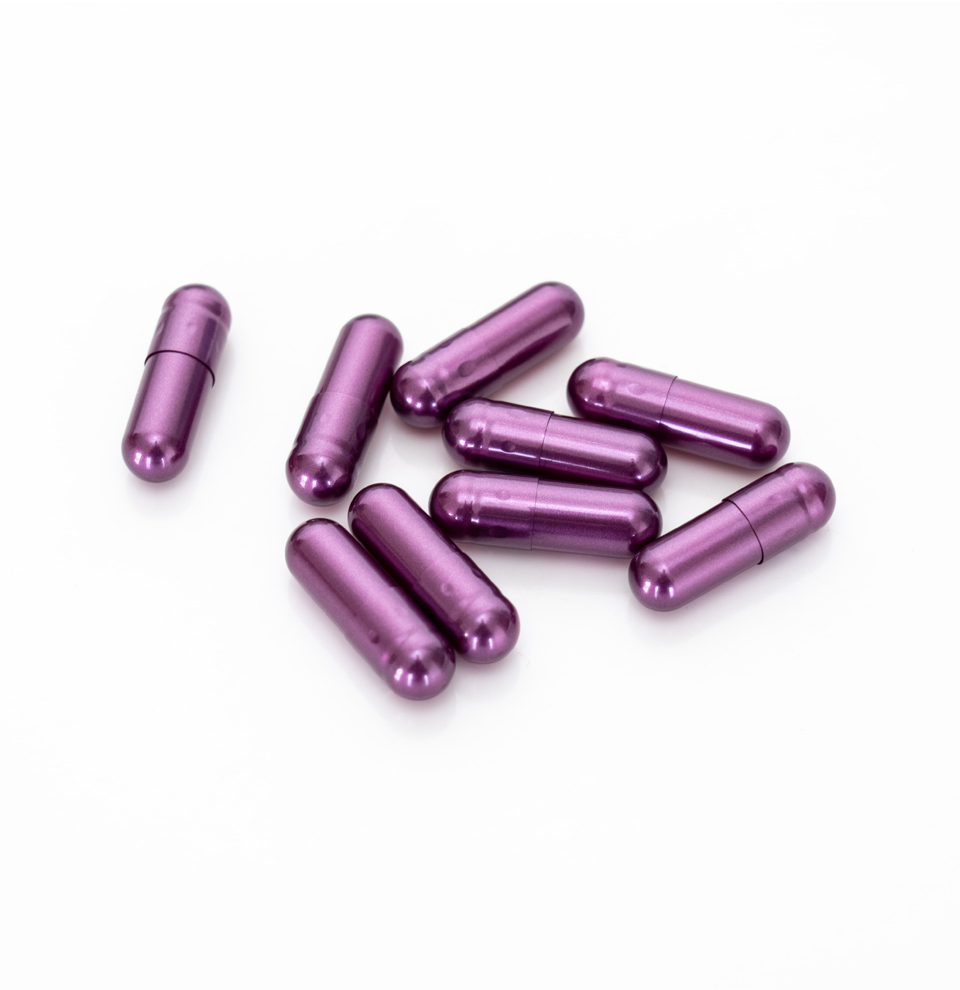 Pearl Capsule Manufacturers, Wholesale Metallic Capsule SuppliersShaoxing Zhongya Capsule Co., Ltd is China pearl capsules manufacturers and metallic capsules suppliers, producing wholesale pearl capsul...View Product →
 Wholesale HPMC Vegetable Empty Capsules Manufacturers, SuppliersZhongya Capsule Co., Ltd is China HPMC empty capsule manufacturers and vegetable empty capsule suppliers, Our factory specializes in whol...View Product →
Based on the clinical and practical attributes described above, ODTs are particularly valuable in the following situations:
Most commercial ODTs disintegrate in under 30 seconds when placed on the tongue. Some freeze-dried products break down in less than 10 seconds. The European Pharmacopoeia allows up to 3 minutes for orodispersible tablets, but the faster a tablet dissolves, the higher the patient acceptance tends to be.
Yes. The entire purpose of the dosage form is that saliva provides enough liquid to disintegrate the tablet. The patient places the tablet on the tongue, waits for it to break down, and swallows the suspension naturally. No glass of water is needed.
A sublingual tablet is placed under the tongue and is designed for the active ingredient to be absorbed directly through the sublingual mucosa into the bloodstream. An ODT is placed on top of the tongue, disintegrates there, and most of the dose is swallowed with saliva and absorbed in the gastrointestinal tract. Pre-gastric absorption happens in an ODT, but it is only a fraction of the total dose, whereas sublingual delivery relies on absorption through the oral mucosa as the primary route.
Only up to a point. The tablet must stay small enough to rest comfortably on the tongue, so total tablet weight is typically capped near 400 mg. If the active ingredient dose, plus the necessary taste-masking and disintegration excipients, exceeds that capacity, a capsule or a conventional tablet may be a more practical format.
ODT matrices are porous and hygroscopic, which means they absorb moisture from the air quickly. A sealed unit-dose blister pack protects each tablet from humidity, mechanical damage, and contamination until the patient opens it. Bottles are rarely used for ODTs because every time the bottle is opened, all the tablets inside are exposed to ambient humidity.
The physical disintegration of the tablet happens in the mouth. Once the disintegrated particles are swallowed, the active ingredient dissolves in the gastrointestinal fluids as it would from a conventional dosage form. The term "disintegrating" refers to the breakdown of the tablet structure in the saliva, not the dissolution of the drug molecules themselves.
A capsule is usually the better choice when the active dose is high, the drug has a strong bitter taste that is hard to mask, the formulation contains moisture-sensitive or oxygen-sensitive ingredients, or the target market expects a low unit cost. Capsules also allow faster line changeovers and simpler process validation than ODTs. The trade-offs are swallowing and water dependency, which some patients cannot manage.
Your email address will not be published. Required fields are marked *
If you would like to learn more about our products, please feel free to contact us and we will do our to assist you.
Copyright © Shaoxing Zhongya Capsule Co., Ltd. High Quality Empty Capsule Manufacturers Wholesale Transparent Empty Capsule Factory
All Rights Reserved.

